

Equipment installed on this project


Oil Boiler to Heat Pump: La Cala de Mijas Villa Conversion 2026
Decommissioning a Baxi oil boiler and upgrading to an air-to-water heat pump in a La Cala de Mijas villa — complete plant room overhaul including hydraulic manifold, water softener, and full pipework replacement.
Location
La Cala de Mijas
Previous System
Baxi Oil Boiler
New System
Daitsu Aerothermal + Buffer
Energy Saving
55–65%
Duration
5 Days
Completed
April 2026
Complete Photo Documentation
Before, during and after — complete documentation of the oil boiler to heat pump conversion in La Cala de Mijas
_1775828721289-CFS-YQpD.jpeg)
_1775828721289-BIaKuK7G.jpeg)
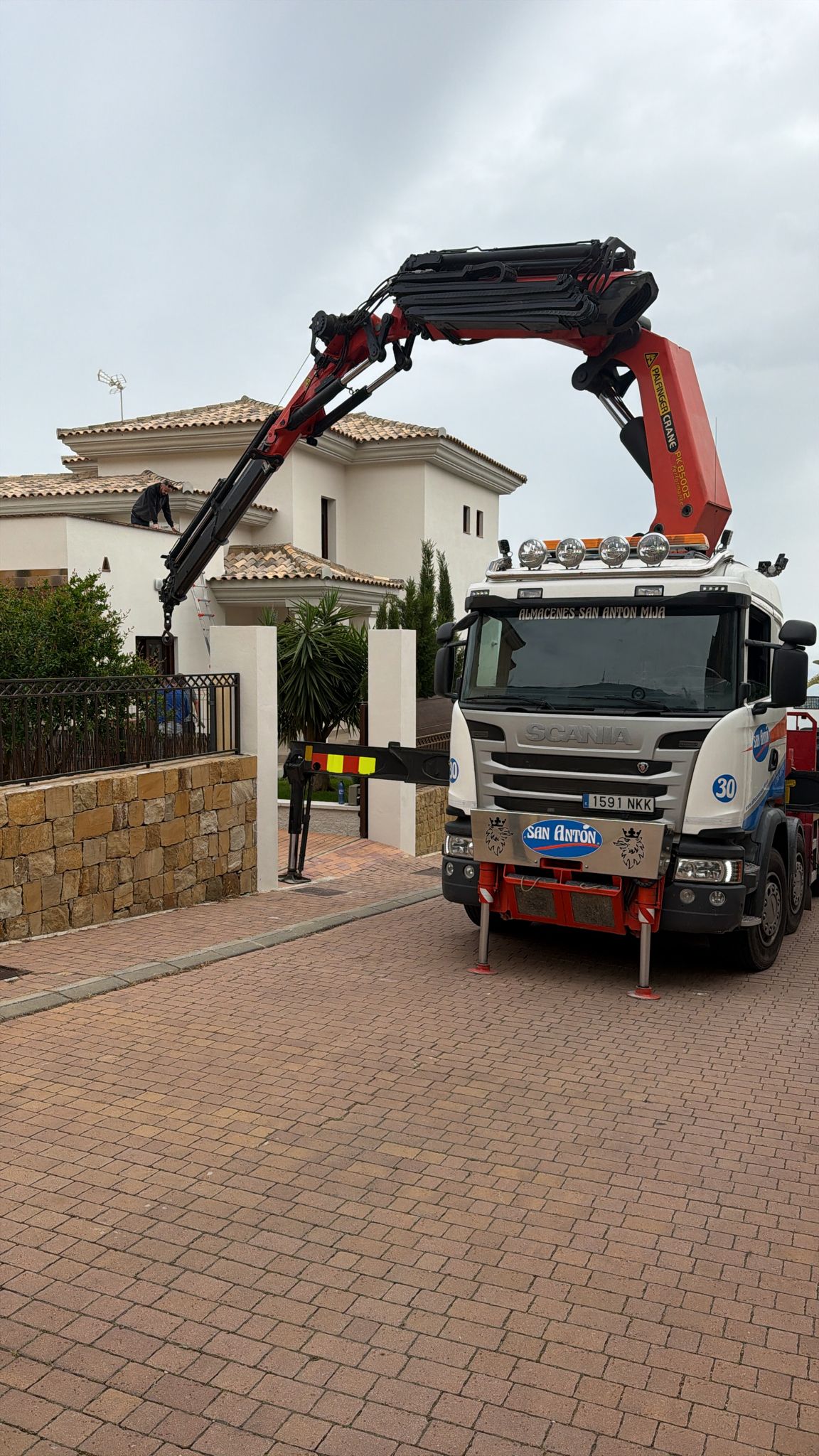
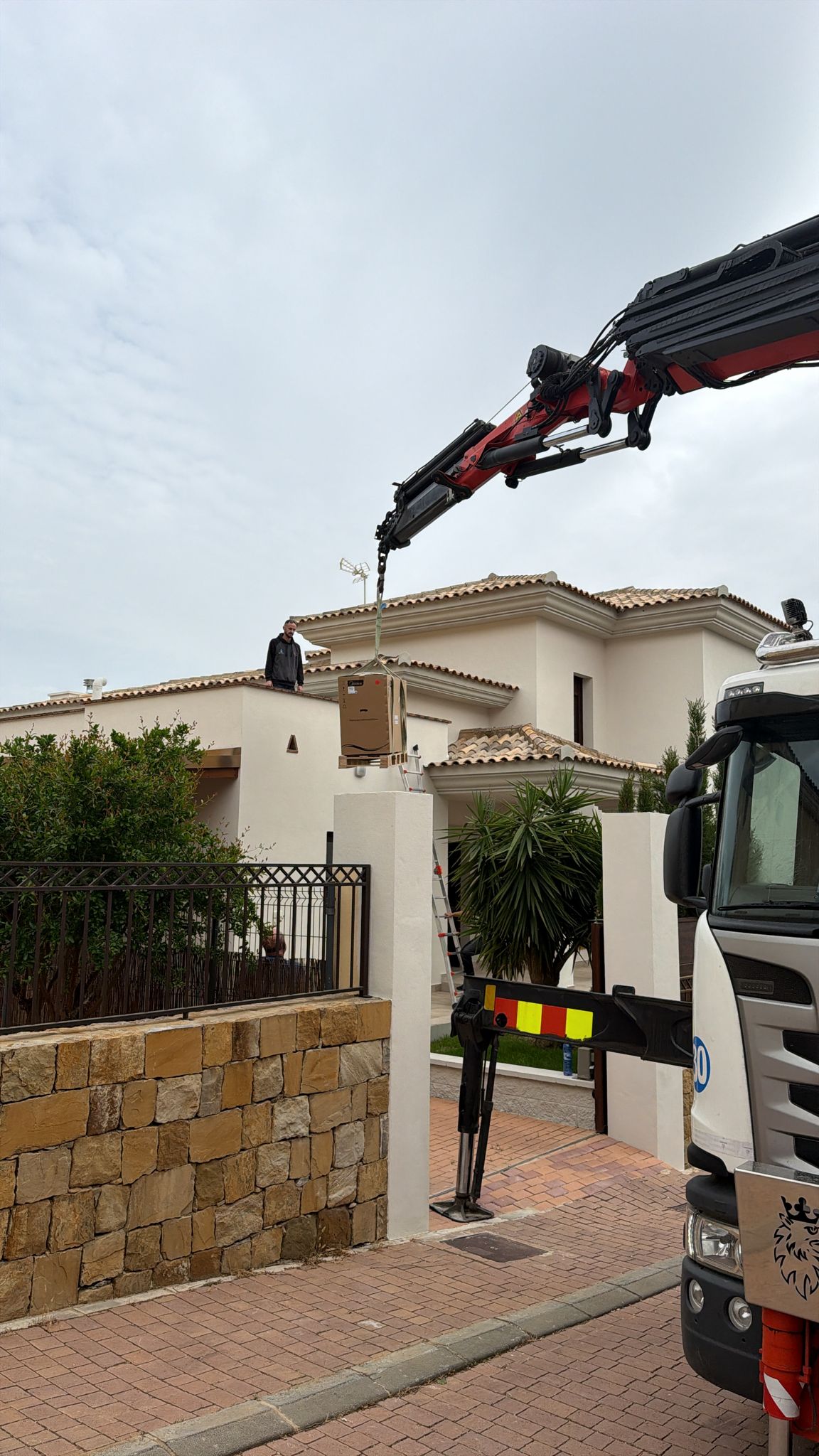
The new heat pump outdoor unit was delivered and hoisted to the villa rooftop by Palfinger crane truck from Almacenes San Antón Mija. For properties with restricted access or elevated rooftops, crane delivery ensures safe installation without risk of property damage.
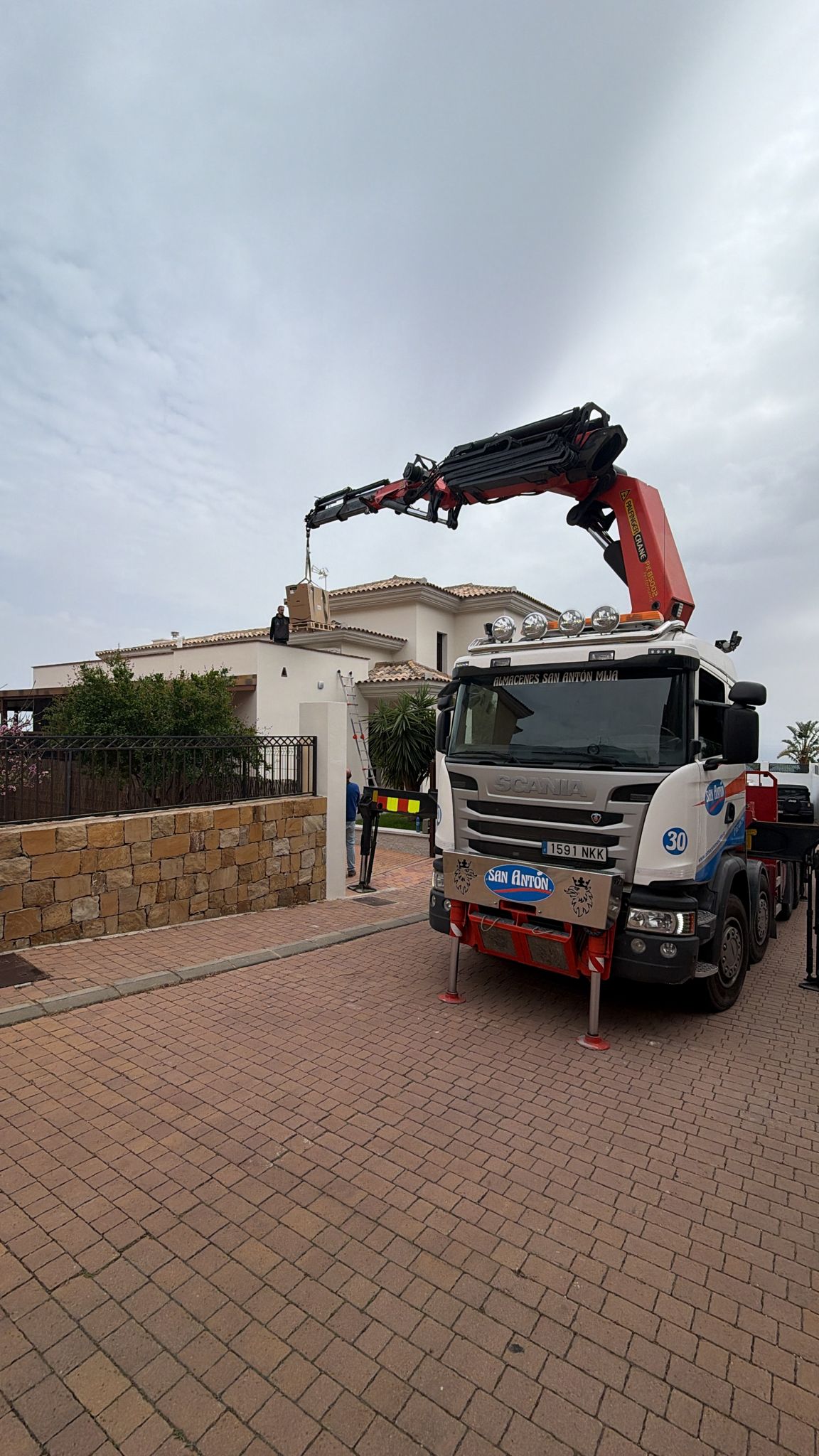
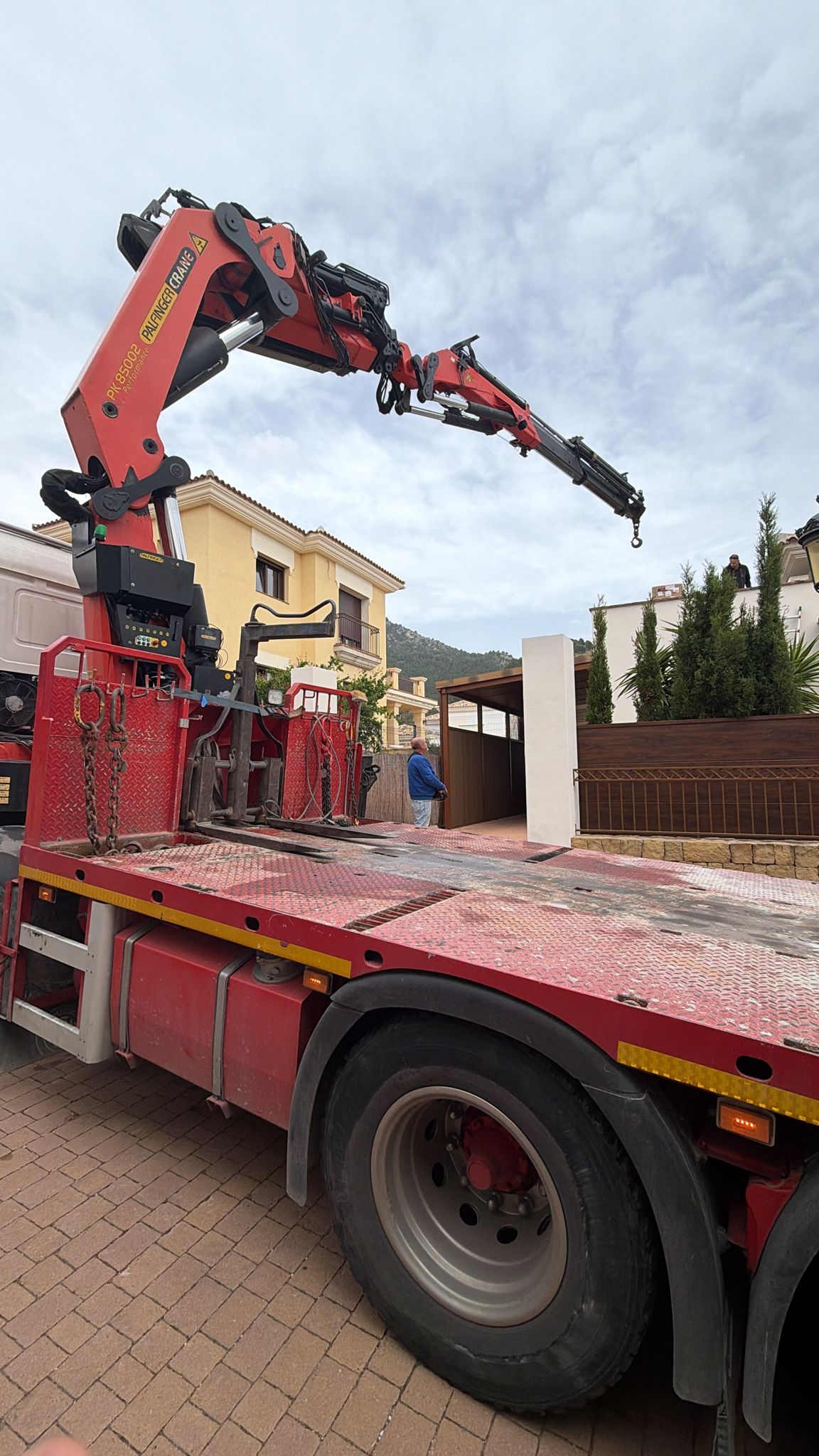
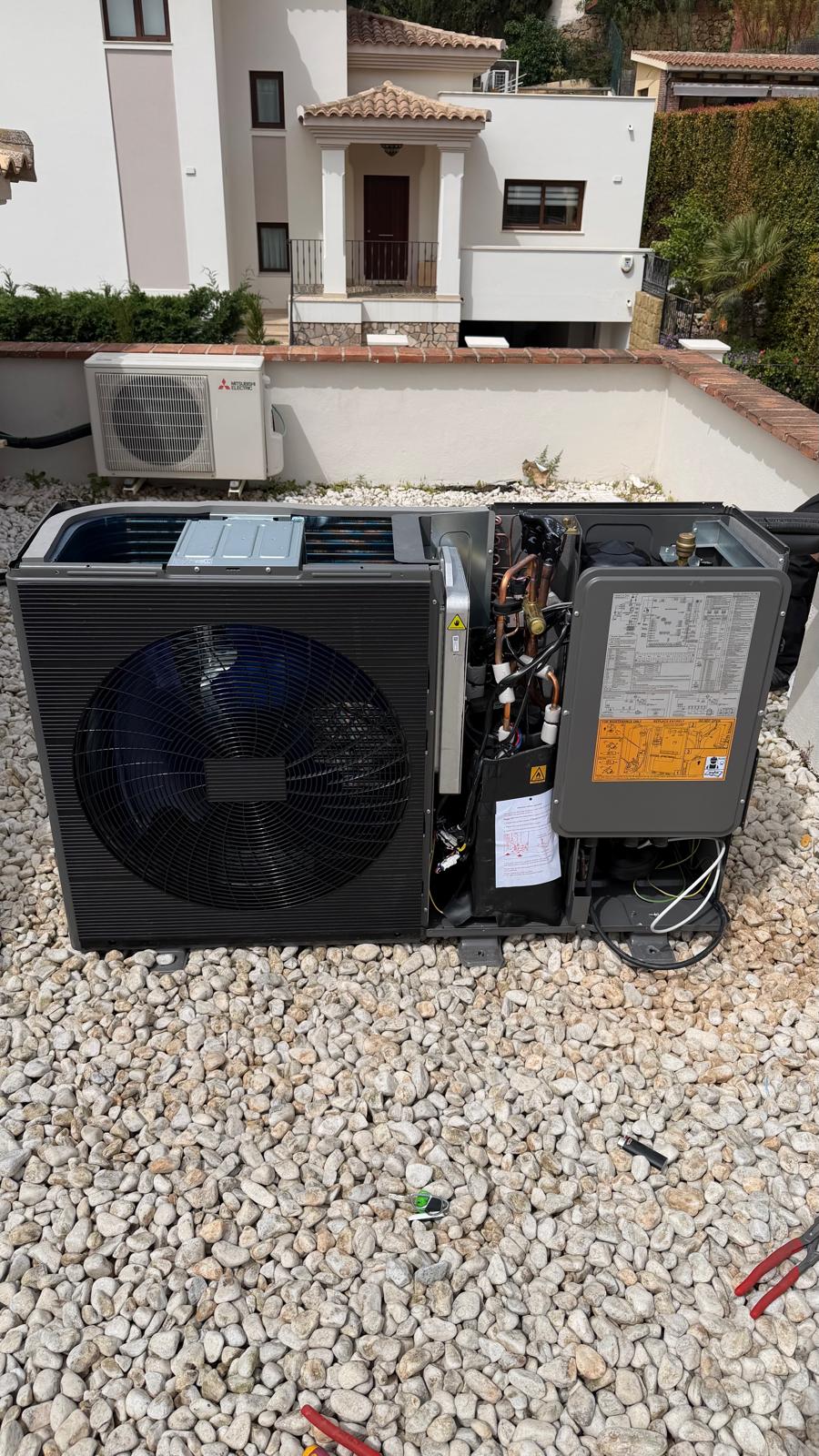
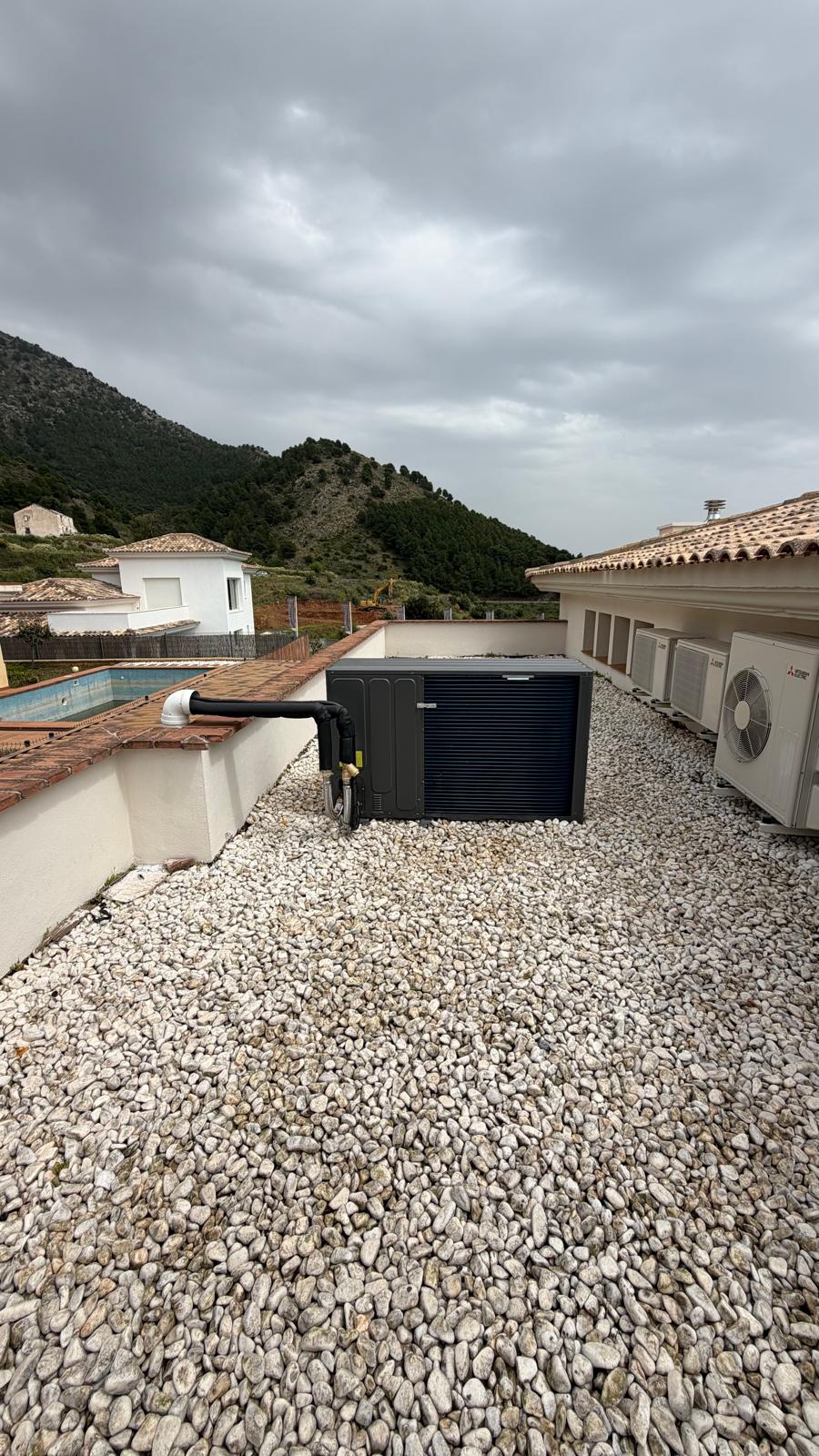
The Midea outdoor unit installed on the flat roof of the villa in La Cala de Mijas. The Midea unit acts as the outdoor heat pump — extracting heat from ambient air and transferring it to the indoor distribution circuit. Midea is the parent manufacturing group behind the Daitsu brand in Spain.
_1775829205411-DwxaGd_2.jpeg)
_1775829205411-imeKLZOf.jpeg)
_1775829205411-DkxITPI2.jpeg)
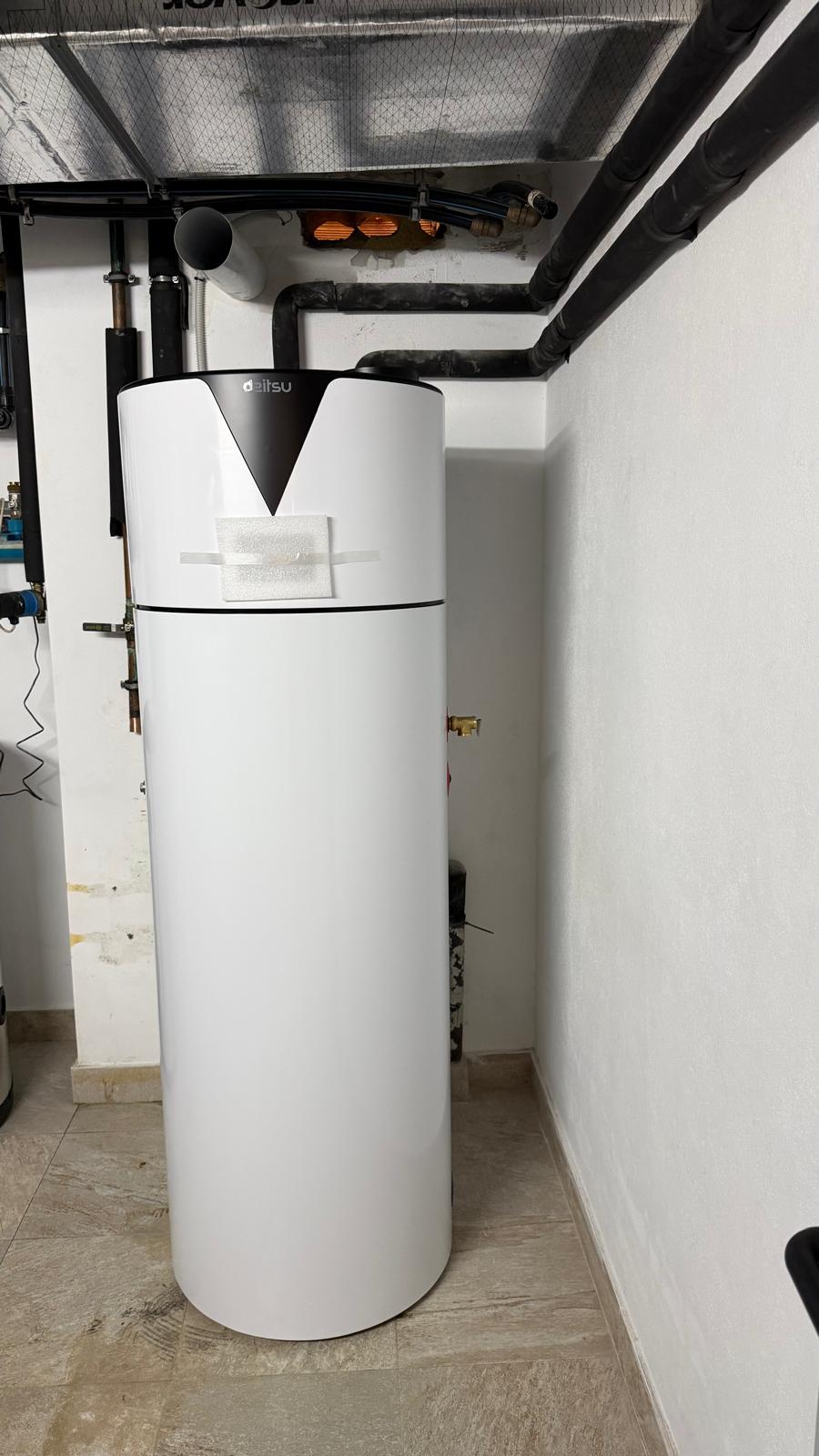
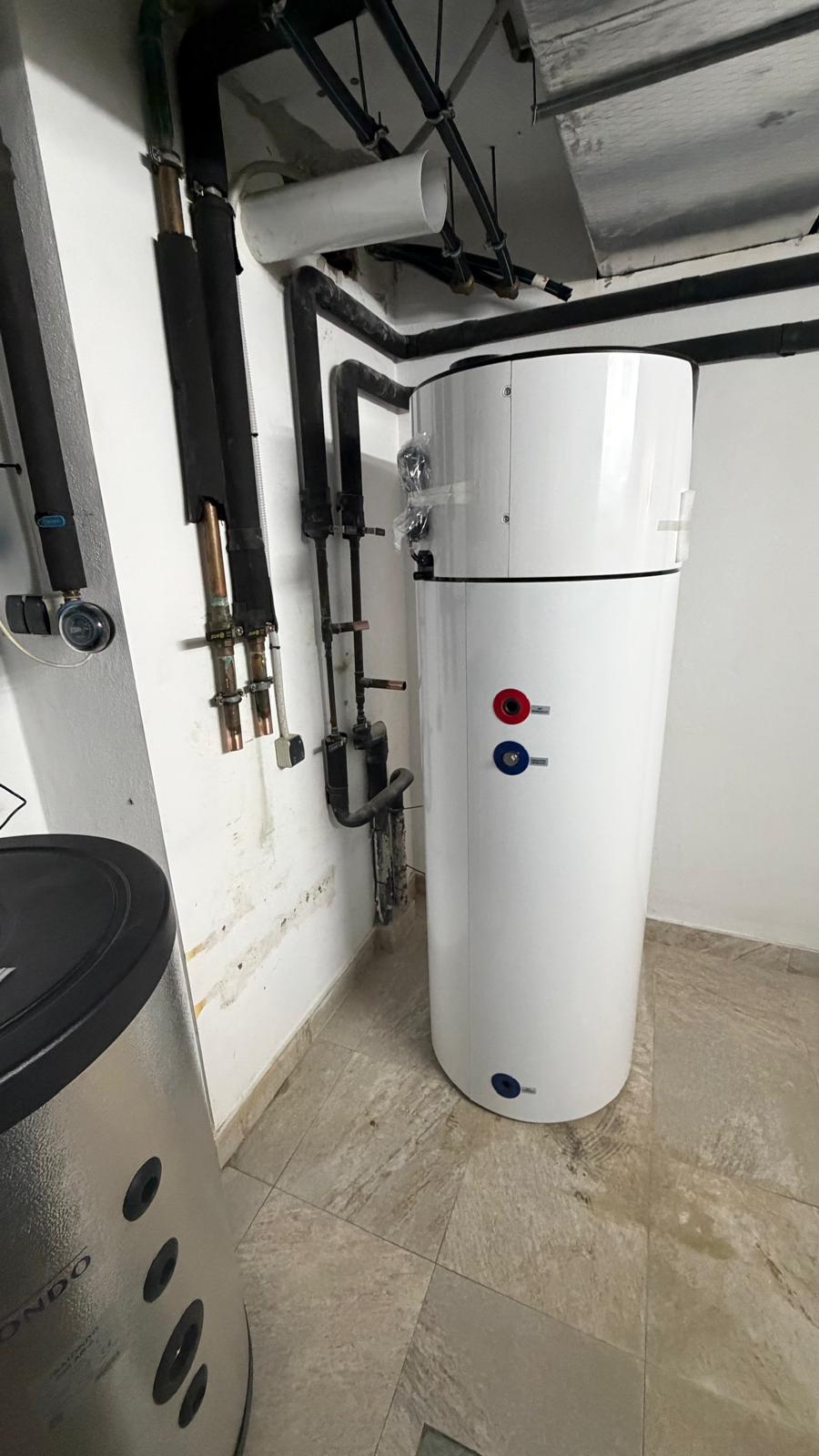
The new Daitsu aerothermal heat pump installed in the plant room, alongside a stainless steel buffer cylinder. The Daitsu system combines the heat pump and domestic hot water tank in one compact unit, with a COP of up to 4.0 for hot water production.
_1775829068059-BjqvPX5k.jpeg)
_1775829068059-DlVG0Z5-.jpeg)
_1775828867031-BeChW4-x.jpeg)
_1775828867031-DnNxXgNQ.jpeg)
_1775829205411-3CDCROb4.jpeg)
_1775829205411-BIACR98C.jpeg)
_1775829205411-CBuZ3Iv3.jpeg)
_1775829205411-H2aTtf4W.jpeg)
_1775829205411-DC1pjZU9.jpeg)
The Midea/Daitsu system has passed commissioning and is live. The smart thermostat shows 21°C with Zone 1 active. The client confirmed normal hot water and heating within 24 hours of installation completion.
_1775829205411-Ip8UXCvZ.jpeg)
_1775829205411-CCK8VHmm.jpeg)
_1775829205411-D21PvsCf.jpeg)
The Project: Replacing an Oil Boiler with a Midea/Daitsu Heat Pump System in La Cala de Mijas
This La Cala de Mijas villa had been running on oil heating for years — an ageing Baxi oil-fired condensing boiler connected to a large green oil storage tank in the basement plant room. The system worked, but it was expensive, environmentally damaging, and increasingly difficult to maintain as parts for ageing oil boilers become scarce across Spain. The homeowner approached Agua Therm for a full assessment and decommissioning of the oil system, with replacement by a modern heat pump setup. The scope grew as we uncovered the full picture: ageing copper pipework, a complex hydraulic manifold requiring replumbing, and supporting infrastructure that needed upgrading to work with the new heat pump. The final solution combines a Midea M-Thermal monobloc outdoor air-to-water heat pump (R32 refrigerant, DC inverter, A+++ rated) with a Daitsu Heatank V4 AIHD 200L aerothermal domestic hot water unit (R290 refrigerant, COP ≈3.5) and an Ibaiondo AR-A 200L stainless steel inertia buffer tank — a complete, professionally engineered replacement of everything that came before it. This page documents the full process in detail: what we found, what we removed, what we installed, and why this particular combination makes technical and financial sense in 2026.
Oil Boilers in La Cala de Mijas: An Ageing and Expensive Problem
La Cala de Mijas sits between Fuengirola and Marbella on the Costa del Sol — a coastal village popular with both Spanish residents and international homeowners. Many villas in La Cala were built in the 1980s and 1990s and fitted with oil-fired central heating at a time when heat pumps were rare and diesel was cheap. In 2026, the landscape has changed completely. Gasoil C (heating oil) now costs €1.30–1.37 per litre nationally, with Spanish average residential consumption of 600–1,200 litres per year for combined heating and hot water — meaning annual oil bills of €800–1,650 even for a relatively mild Costa del Sol property. Contrast this with a Midea M-Thermal heat pump at rated COP of 4.2–4.5 in Mediterranean conditions: for every 1 kWh of electricity consumed, 4.2–4.5 kWh of heat is delivered. La Cala's exceptionally mild winters — average January low of 8°C, rarely below 5°C — mean the heat pump operates near its peak rated efficiency for the entire heating season. Annual saving on a typical La Cala villa: €600–950 compared to oil, every year, indefinitely.
Initial Assessment: What We Found in the Plant Room
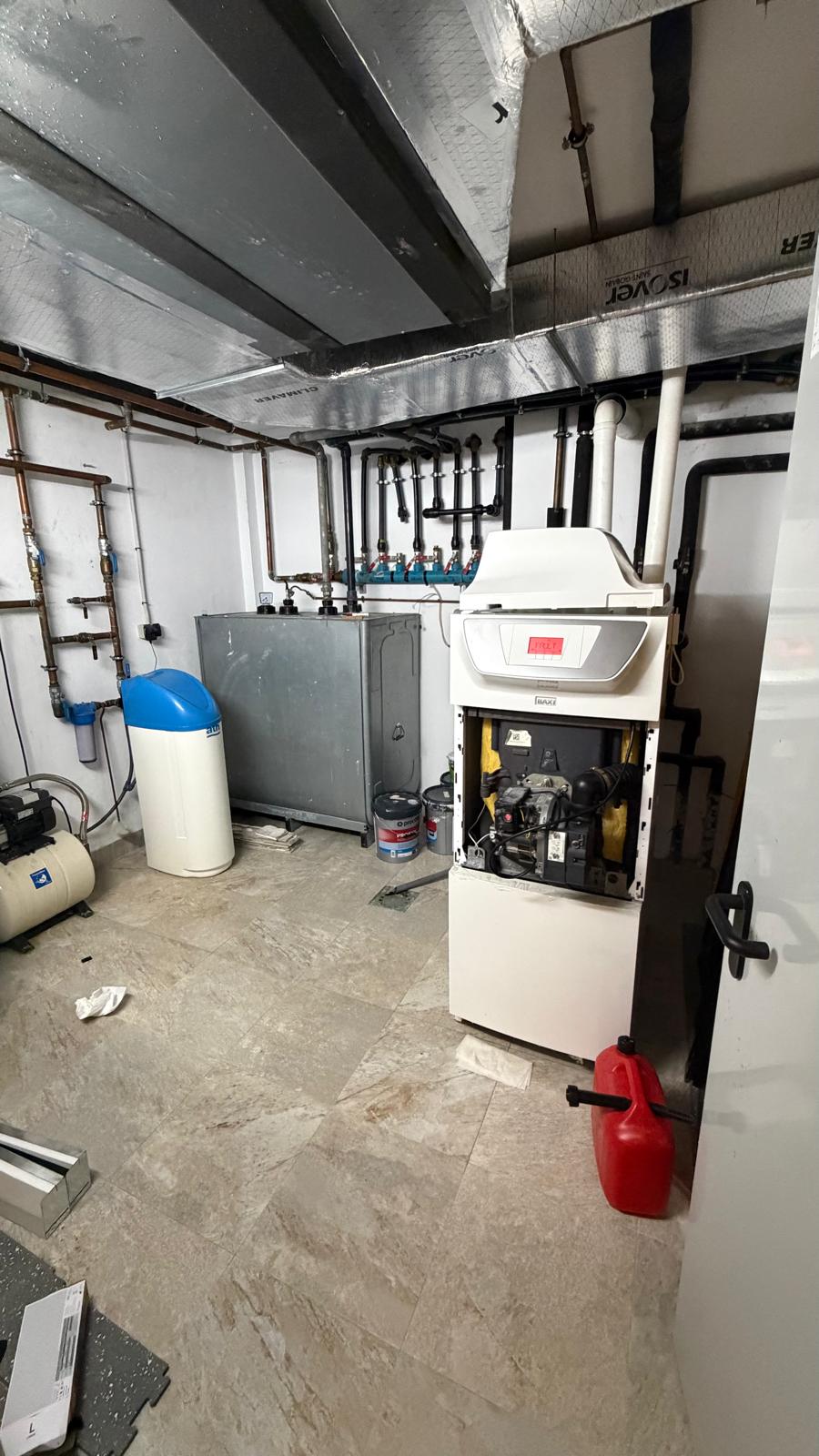
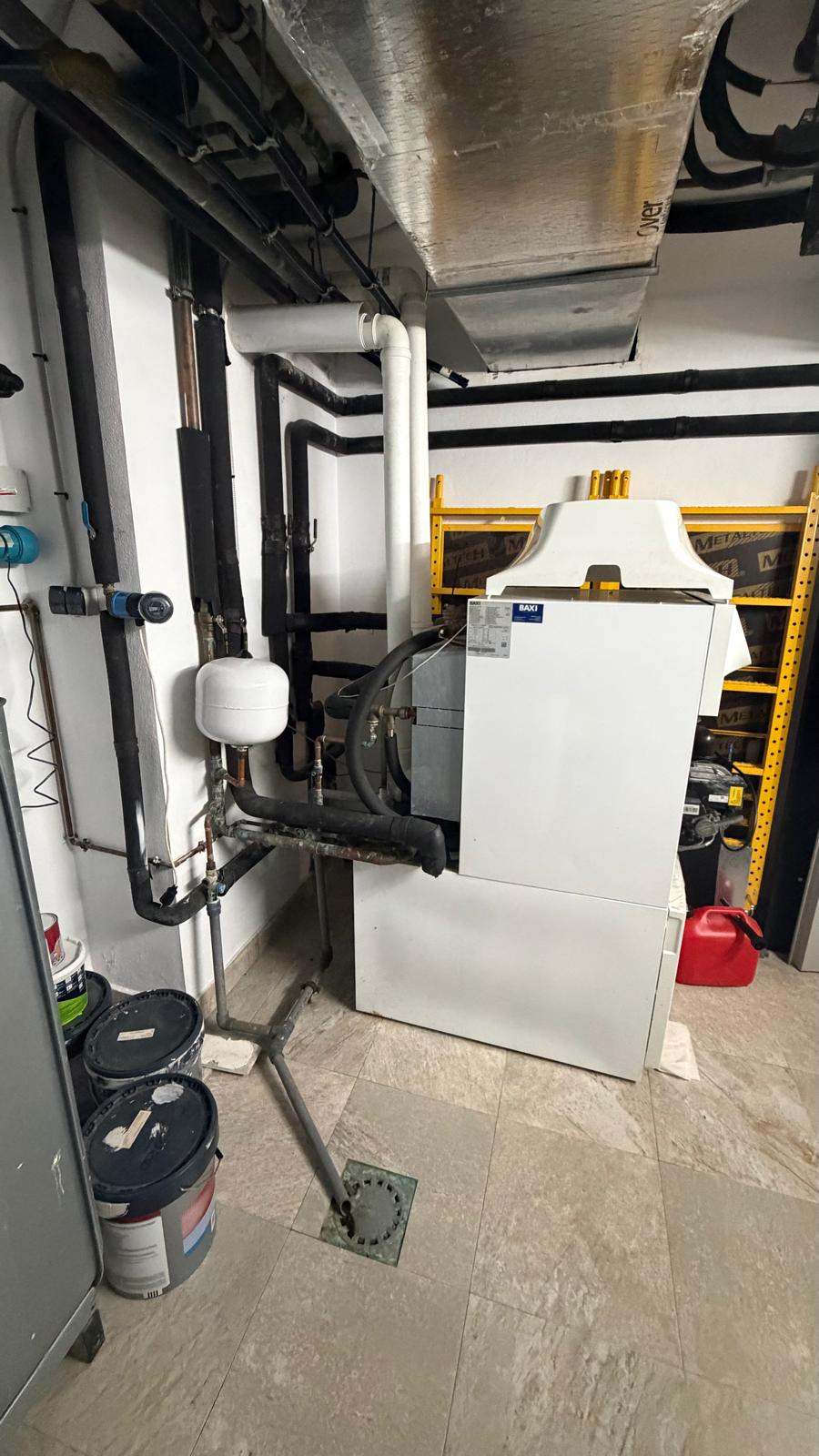
When Craig carried out the initial site survey at this La Cala villa, the plant room told a familiar story. The Baxi oil-fired condensing boiler — a floor-standing unit — sat at the centre of a complex arrangement of copper pipework, a large green oil storage tank, a hydraulic manifold (the blue distribution unit), an expansion vessel, a water softener, and a pressure pump. Each element had to be evaluated before we could plan the replacement.
Baxi Oil Condensing Boiler
A floor-standing Baxi oil-fired condensing boiler — a popular choice in Costa del Sol villas from the 2000s and 2010s. While Baxi produce reliable units, oil condensing boilers require annual servicing, nozzle replacement, heat exchanger cleaning, and flue inspection. As Baxi phases out oil boiler production in line with EU decarbonisation targets, parts availability will diminish over the coming years. The boiler was operational but nearing the end of its economic life.
Green Oil Storage Tank
A large polyethylene oil storage tank (green, above-ground) occupied a significant portion of the plant room. Beyond the space it consumed, oil tanks carry regulatory requirements: they must be bunded or have secondary containment, they require periodic condition surveys, and an oil spill in the plant room would trigger environmental liability under Spanish legislation. Decommissioning the tank removes this ongoing risk and reclaims valuable plant room space.
Blue Hydraulic Manifold System
The existing blue hydraulic manifold distributed heated water around the property's different zones. While the manifold itself was functional, the pipework connections and flow-balancing valves needed assessment and partial replumbing to ensure compatibility with the new heat pump's lower flow temperatures. Heat pumps work most efficiently at flow temperatures of 35–45°C (vs. oil boilers at 60–75°C), which requires checking that all radiators and circuits are sized appropriately.
Expansion Vessel and Safety Equipment
The existing expansion vessel was sized for the oil boiler's higher operating pressures. With a heat pump system running at lower temperatures and different pressure characteristics, the vessel size and pressure setting needed to be verified. Safety valves and pressure gauges were also inspected.
Water Softener
La Cala de Mijas draws water from the Mancomunidad de Municipios de la Costa del Sol Occidental supply — water classified as 'very hard' with calcium carbonate levels of 250–350 mg/L. Without softening, limescale accumulates inside heat exchanger coils, reducing heat transfer efficiency by 20–30% within 2–3 years. The existing water softener was retained and its operation verified as part of the plant room overhaul.
Pressure Pump System
The pressure pump and pressure vessel supplying domestic water were inspected. These remained functional and were incorporated into the new system layout, with updated pipework routing to complement the heat pump installation.
The Decommissioning Process: Oil Boiler Safe Removal
Decommissioning an oil boiler in Spain is not simply a case of disconnecting and removing the unit. There are regulatory, safety, and environmental requirements that must be followed:
Oil Supply Isolation and Tank Decommissioning
The oil supply line from the storage tank to the boiler was isolated and the residual oil in the line safely drained. The oil storage tank itself was removed — any residual oil was collected and disposed of via a licensed waste contractor in accordance with Spanish waste regulations (Ley 7/2022 de Residuos). The tank area was inspected for any ground contamination.
Boiler Disconnection
The Baxi boiler was disconnected from the heating circuit, the flue system was removed, and the unit was safely isolated from the electrical supply. The boiler's internal heat exchanger was drained. The unit was removed and disposed of via an authorised WEEE (Waste Electrical and Electronic Equipment) contractor.
Flue Penetration Sealing
The flue pipe penetration through the plant room wall was removed and the opening made good. Proper sealing is essential to prevent draughts, moisture ingress, and potential pest entry into the plant room.
Legacy Pipework Removal
Old copper pipework connections to the decommissioned boiler were cut back and capped. New pipework runs were planned and routed to connect the heat pump into the existing manifold and distribution circuit.
Heat Pump Installation: New Pipework and System Integration
With the oil boiler and tank removed, the plant room was replumbed to integrate the new air-to-water heat pump. New insulated black pipework (visible in the installation photos) was routed through the plant room, connecting the outdoor heat pump unit to the existing hydraulic manifold system.
Complete Scope of Works
Installed Equipment — Technical Specifications
Full specifications for all major equipment installed in this La Cala de Mijas villa.
Outdoor Unit: Midea M-Thermal Monobloc
Air-to-water heat pump — rooftop mounted
DHW Heat Pump: Daitsu Heatank V4 AIHD 200L
Aerothermal domestic hot water unit — plant room mounted
Inertia Buffer Tank: Ibaiondo AR-A 200L
Thermal inertia tank for heating circuit — manufactured in Spain
Ductwork: Climaver® (Saint-Gobain ISOVER)
Thermoreflective self-supporting duct — visible on plant room ceiling
Installation Timeline: 5 Days on Site
7–11 April 2026 — La Cala de Mijas, Málaga.
Decommissioning & Preparation
7 Abril / April 2026
- Full plant room survey and photography of all existing connections before any dismantling begins
- Isolation of oil supply line — safe draining of residual fuel from the line
- Disconnection of Baxi boiler from heating circuit and electrical supply
- Removal of flue system and sealing of plant room wall penetration
- Draining of boiler's internal heat exchanger and full unit removal
- Oil tank emptying and removal — residual oil collected by licensed waste contractor
- Old copper pipework removal from boiler connections — cut back and capped safely
- Existing blue hydraulic manifold inspection — assessment of what stays and what is replumbed
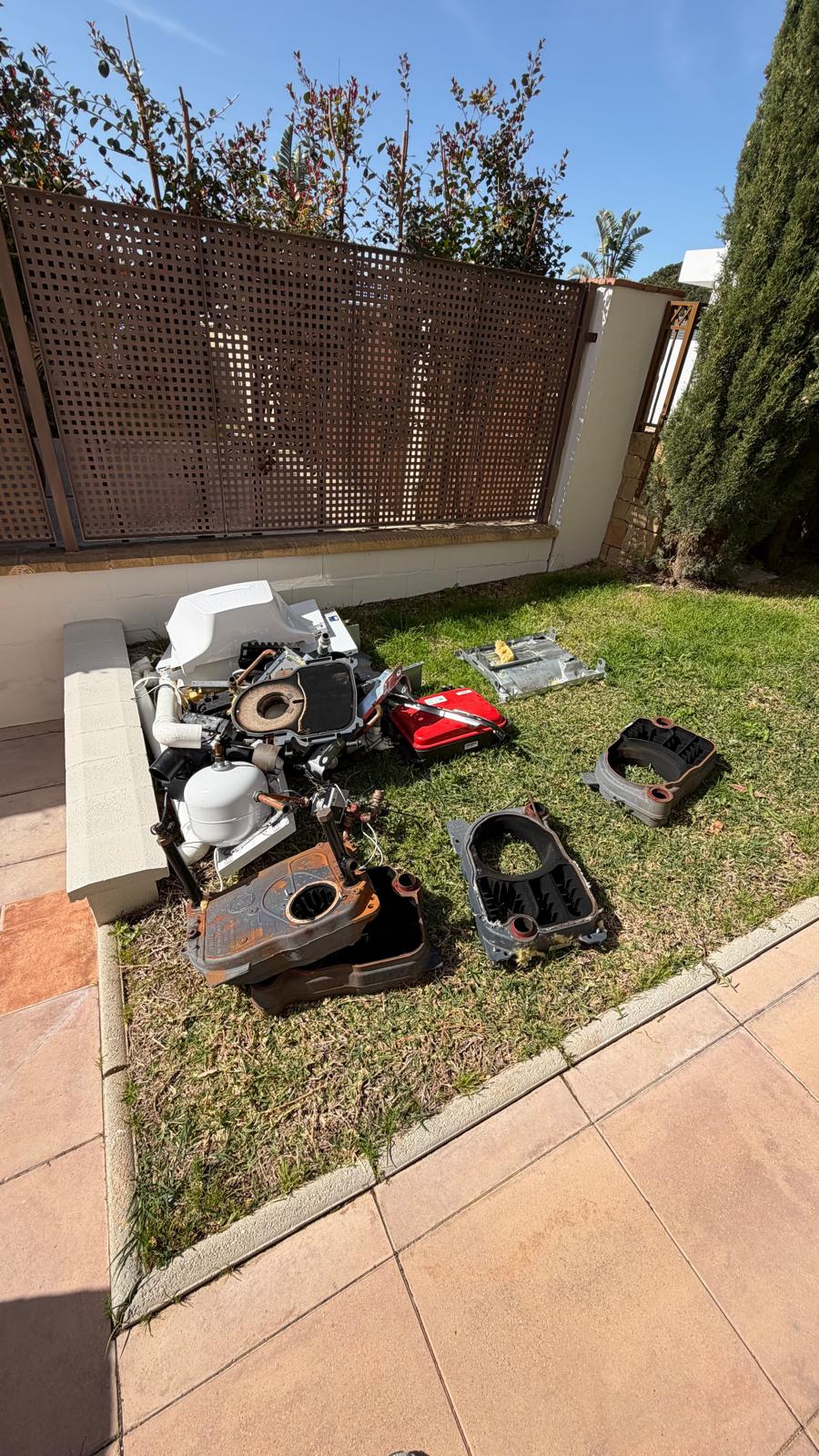
- All removed components laid out in garden ready for WEEE contractor collection
Heat Pump Installation & New Pipework
8 Abril / April 2026
- Arrival of Almacenes San Antón Mija truck with Midea M-Thermal on red flatbed
- Palfinger crane deployment — arm extended over villa rooftop
- Midea unit lifted to flat roof — technician on roof guiding the crane positioning
- Midea unit positioned on anti-vibration feet on white stone roof bed
- Black insulated pipework runs from rooftop to plant room — through bored wall penetration
- Ibaiondo AR-A 200L buffer tank positioned in plant room
- Daitsu Heatank V4 AIHD 200L positioned — Climaver air duct connected to outside
- Full hydraulic connections: Midea → Ibaiondo buffer → blue distribution manifold → zones
- Daitsu Heatank DHW connections: cold water inlet and hot water outlet with dedicated DHW expansion vessel
- Red expansion vessel installed for heating circuit and pressure verified
- Hydraulic pressure test on all new circuits before filling with water
Electrical, Commissioning & Handover
9 Abril / April 2026
- Installation of dedicated 32A MCB-protected circuit for Midea unit — cabled from consumer unit
- Isolation point fitted next to outdoor unit on rooftop — required under REBT electrical regulations
- Type 2 surge protector installed on heat pump circuit — coastal lightning protection
- 10A electrical circuit for Daitsu Heatank — connected and tested
- Midea M-Thermal commissioning: refrigerant charge verified, start-up test, parameter verification
- Daitsu Heatank commissioning: first-start mode, initial heating cycle
- Smart zone thermostat programming — Zone 1 set to 21°C, night mode programmed
- Midea night mode configuration (23:00–08:00 on PVPC tariff) using Ibaiondo buffer as thermal battery
- System balancing and flow rate verification across all manifold zones
- Final verification: thermostat ambient 21°C confirmed, DHW hot confirmed — system live
- Homeowner training — Daitsu WiFi app, thermostat adjustment, annual service recommendation
- Full handover documentation: installation certificates, warranties, equipment data sheets
Economics & Return on Investment
Real running cost comparison: gasoil C vs. Midea/Daitsu system in La Cala de Mijas, Málaga.
Old System: Baxi Oil Boiler
New System: Midea M-Thermal + Daitsu Heatank
Summary: Projected Annual Saving
€450–950
Energy saving
per year vs. oil
€4,500–9,500
10-year saving
(excluding future oil price rises)
~3.8 t/año
CO₂ reduction
(vs. oil combustion)
* Estimates based on current gasoil C prices (Málaga, April 2026), PVPC off-peak electricity tariff and La Cala de Mijas climate conditions. Actual savings will vary with usage, property size and future energy price changes. Subject to site survey.

Why Midea M-Thermal + Daitsu Heatank Is the Right Combination for La Cala
"This La Cala job is a textbook example of what we do best: stripping out an ageing, costly oil system and replacing it with a purpose-built combination that suits the property, the climate, and the homeowner's budget. We specified the Midea M-Thermal for the outdoor unit because it is a full DC inverter monobloc — the refrigerant stays in the outdoor unit, which simplifies installation enormously and eliminates any F-gas compliance issues in the plant room. For domestic hot water, the Daitsu Heatank V4 AIHD 200L uses R290 (propane), a natural refrigerant with a GWP of just 3 versus R410A's 2,088. That's a dramatic environmental improvement. The Ibaiondo buffer tank is a Spanish-manufactured product — excellent build quality, well-supported, and sized correctly at 200 litres for the system's thermal mass requirements. The economics are straightforward: gasoil C in Málaga is currently around €1.20–1.35 per litre. A typical La Cala villa will use 600–1,000 litres of oil for heating and hot water combined — €720–1,350 per year. The new Midea/Daitsu system, running on time-of-use electricity tariffs, will deliver the same heating and hot water for €280–480 per year. That's a saving of €450–870 every year, plus no oil delivery logistics, no tank maintenance, no annual burner service, and no flue inspections."
Rob Greeves
HVAC Director, Agua Therm

Electrical Integration: Supplying the Midea and Daitsu Units
"The Midea M-Thermal monobloc is a single-phase unit drawing a peak of 16–20A — well within what the villa's existing supply could handle, but it still required a dedicated 32A MCB circuit from the consumer unit with its own isolation point next to the outdoor unit. The Daitsu Heatank runs on a standard 10A domestic circuit. At this La Cala property, the existing consumer unit had adequate capacity, so we didn't need an ICP upgrade — that saved the client time and cost. What we always insist on for coastal installations is proper surge protection: the Midea's inverter board is the most expensive component in the system, and a nearby lightning strike — common in Málaga from September through November — can destroy it instantly. A Type 2 surge protector on the heat pump circuit costs roughly €80 and saves a potential €600–900 board replacement. We also programmed the Midea's night mode: it runs its heavy load during PVPC off-peak hours (23:00–08:00), using the Ibaiondo buffer tank as a thermal battery. The result is that peak electricity tariff consumption is minimal — the house stays warm all day from heat stored in the 200L buffer overnight."
Craig Whitham
Electrical Director, Agua Therm
Premium alternative · How Airzone supervises aerothermal systems
How Airzone could have unified the Midea heat pump, Daitsu fan coils and DHW
This La Cala de Mijas villa chose to control the Midea M-Thermal heat pump and the Daitsu fan coils from their factory remotes — a perfectly valid setup and the most cost-effective option when the customer is comfortable managing production and emission separately. But the alternative we considered is worth understanding: Airzone, a Spanish zoning and control system with its head office in Málaga (under 30 km from La Cala), which integrates natively with air-to-water heat pumps, hydronic fan coils and inertia buffer tanks like the Ibaiondo AR-A 200L installed on this project.
As accredited Airzone installers on the Costa del Sol (the system features in our Mijas Airzone Flexa UFH 2025 case study), we know the three product paths that apply to a hydronic installation like this villa's. Each solves a different problem.
A Modbus gateway that plugs directly into the Midea M-Thermal R32 communication port. Exposes DHW mode, heating curve, per-room setpoint and scheduling to the Airzone Cloud app, Alexa, Google Assistant and Apple HomeKit — without replacing the factory controller.
Supports KNX, Modbus RTU/TCP and BACnet IP for villa-grade home automation.
One Aidoo Pro Fancoil module per Daitsu unit — controls the fan speed and the three-way valve room by room, and gives each room its own wired or RF thermostat (Blueface, Think or Lite). Turns standalone fan coils into a single multi-zone system supervised from the same app.
Compatible with 0–10 V, on/off and PWM fan coils — the exact range of the Daitsu units installed.
Had this villa chosen underfloor heating instead of fan coils, Acuazone (Hydrozone) would be the natural path: 24 V motorised heads on the manifold, one floor probe per circuit, and the same control board talking to the Midea over Modbus. Same app, same climate brain, different emitter.
Blueface and Think thermostats hold eu.bac certification (CA ≤ 0.5 K control band).
Quantifiable benefits of adding Airzone
Why Airzone is a technical fit for this project
The Midea M-Thermal R32 monobloc installed in this home exposes its Modbus port from the factory — the same bus the Aidoo Pro Heat Pump module uses to read and write the heating curve and DHW mode. The Daitsu Heatank and the Daitsu fan coils accept 0–10 V and on/off control, the two native modes of Aidoo Pro Fancoil. The Ibaiondo AR-A 200L inertia buffer is ideal for a weather-compensated strategy: the Airzone control board modulates flow temperature against outdoor ambient, keeping the heat pump in its optimal COP band. And the new electrical board we installed meets the isolation and cable-section requirements to add the 24 V supply that powers the control board — without touching the existing ICP.
Considering Airzone for your home?
We provide no-obligation technical surveys for Aidoo Pro, Aidoo Pro Fancoil and Acuazone on new or existing hydronic installations in La Cala, Mijas, Marbella and across the Costa del Sol.
Request an Airzone quoteSources: Airzone (airzonecontrol.com) · European Building Automation and Control Association — eu.bac · Universidad de Córdoba · KNX Association. Savings figures published by the manufacturer; actual performance depends on the home, occupancy patterns and setpoints.
Project Results
55–65%
Fuel Cost Reduction
3.5–4.5
Heat Pump COP
~3.8 t/yr
CO₂ Reduction
Yes
Oil Tank Removed
5 Days
Project Duration
5 Years
Warranty
Frequently Asked Questions
Answers to the most common questions about oil boiler replacement in La Cala de Mijas and the Costa del Sol.
Manufacturers, Standards & Official Sources
On this installation we work exclusively with internationally recognised manufacturers and in full compliance with current European and Spanish regulation. For full transparency and verification, we link below to the official sources for each manufacturer of equipment or instrumentation used on this project, as well as the applicable legal texts:
Global Midea page for the M-Thermal R32 monobloc heat pump range installed on this project (A+++, DC inverter).
Official Spanish distributor of Midea heating and air conditioning equipment, including warranty and technical support for the M-Thermal range.
Daitsu is owned by Eurofred — Spanish manufacturer/brand of the Heatank V4 AIHD 200L R290 (propane, GWP=3) DHW heat pump.
Spanish manufacturer (founded 1965) of the AR-A 200L 6 bar buffer tank used to decouple the heat pump from the underfloor heating circuit.
Saint-Gobain ISOVER's Climaver range — self-supporting insulated ductwork used on the air distribution side of the project.
Consolidated text of the European F-Gas Regulation — applicable to the R32 circuit of the Midea M-Thermal monobloc.
Spanish Royal Decree on commercialisation and handling of fluorinated gases and equipment — published in the BOE.
Instituto para la Diversificación y Ahorro de la Energía — Spain's reference body for energy efficiency benchmarks (Agua Therm does not manage IDAE subsidy paperwork).
External links open in a new tab. Agua Therm is an independent installer and does not officially represent any of the manufacturers cited — the links are provided solely as verifiable technical reference.
Oil Boiler in La Cala? Talk to Us
We offer free site assessments in La Cala de Mijas and across the Costa del Sol. You'll receive a detailed written quotation for your oil boiler replacement.
* All prices subject to site survey. Agua Therm manages installation permits only, not subsidy applications.
La Cala de Mijas — Service Area
Agua Therm covers La Cala de Mijas and the entire Costa del Sol for heat pump installations and oil boiler replacements.
About the Author
Ben Hayden
English-Speaking Electrician & Independent Energy Advisor
Ben Hayden is an English speaking electrician and independent energy advisor based in Marbella, Spain, with over 15 years of electrical experience across Europe. He provides independent energy and electrical checks for overseas property owners and managers across the Costa del Sol — helping clients cut electricity bills, navigate Spanish regulations, and make confident decisions on solar PV, heat pump, EV charger and battery storage projects.
Ben advises in plain English on projects where the paperwork is in Spanish and the stakes are high. His writing has appeared in ExpatArrivals, The Olive Press, Euro Weekly News, BuildingTalk and pv magazine.