

Equipment installed on this project


Marbella Villa: Complete Energy System Upgrade — Aerothermal, AC & Water Systems
Full Villa Transformation: Replacing Outdated Solar Thermal, Fujitsu AC & Water Infrastructure with Modern Ariston Aerothermal Heat Pumps, Mitsubishi Electric Air Conditioning, Water Softener & 1,500L Storage
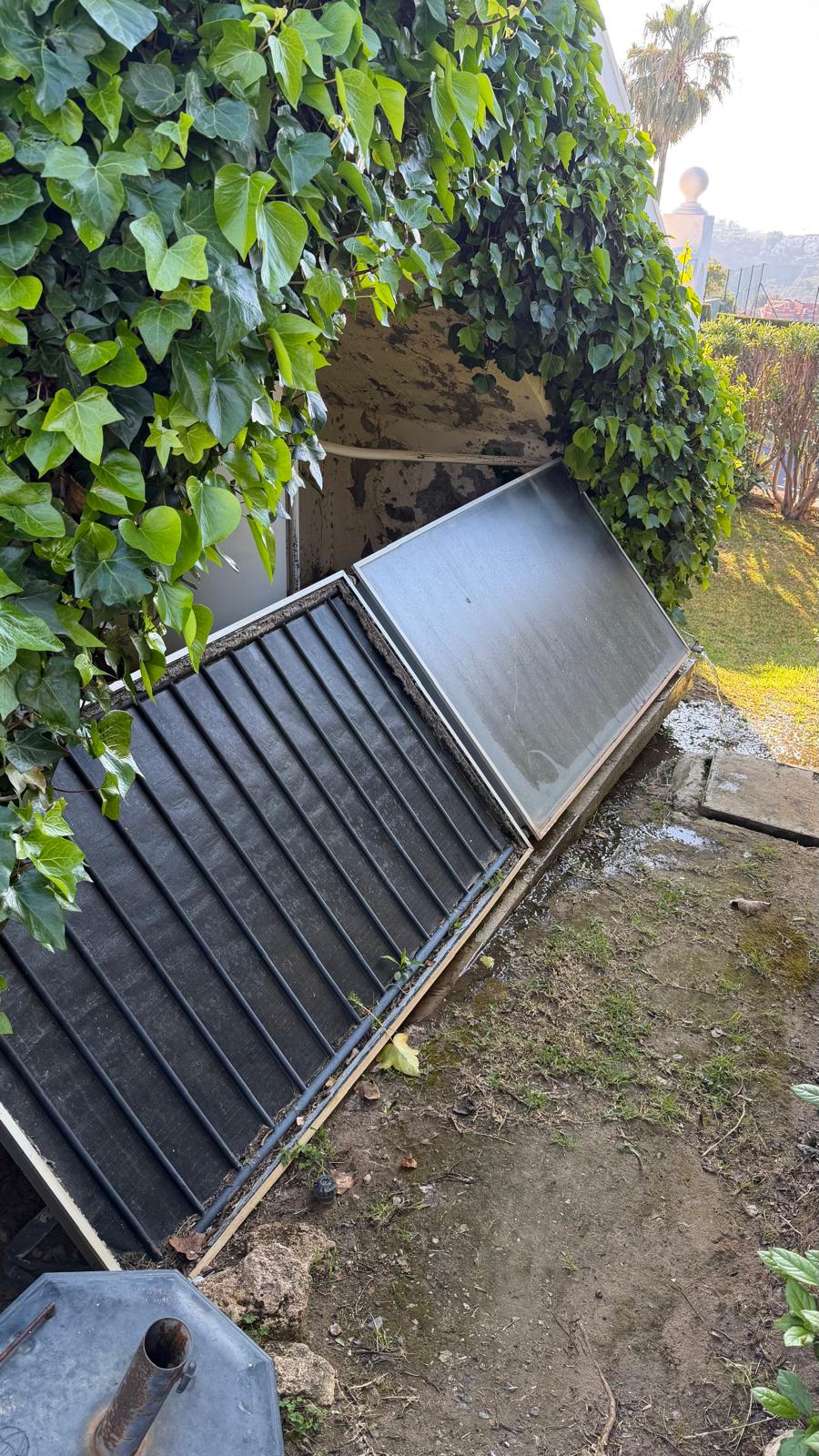
BEFORE: Corroded flat-plate solar thermal collectors — 15+ years old, glycol leaked
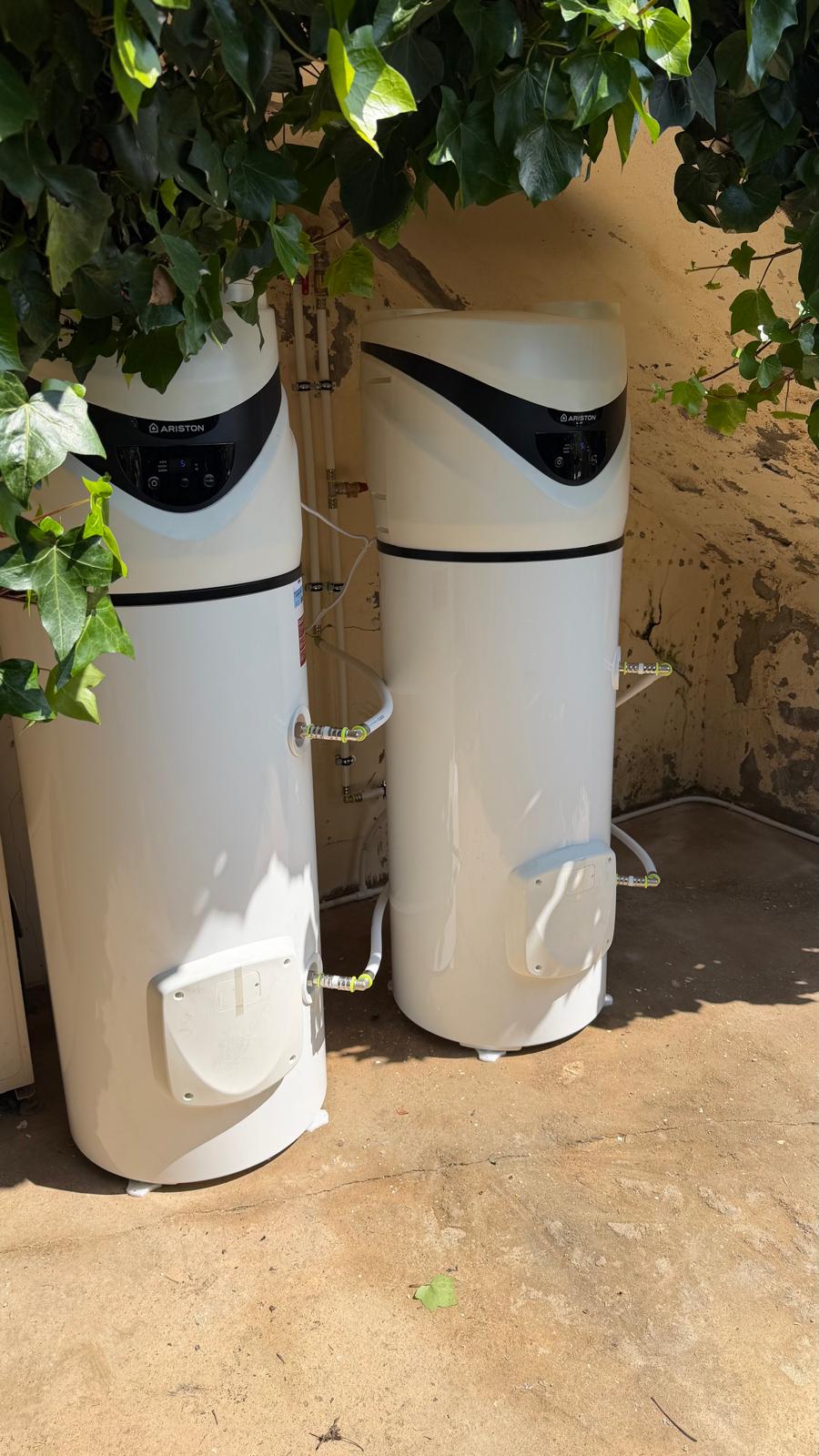
AFTER: 2x Ariston Nuos Plus aerothermal — COP 3.5, A+ rated
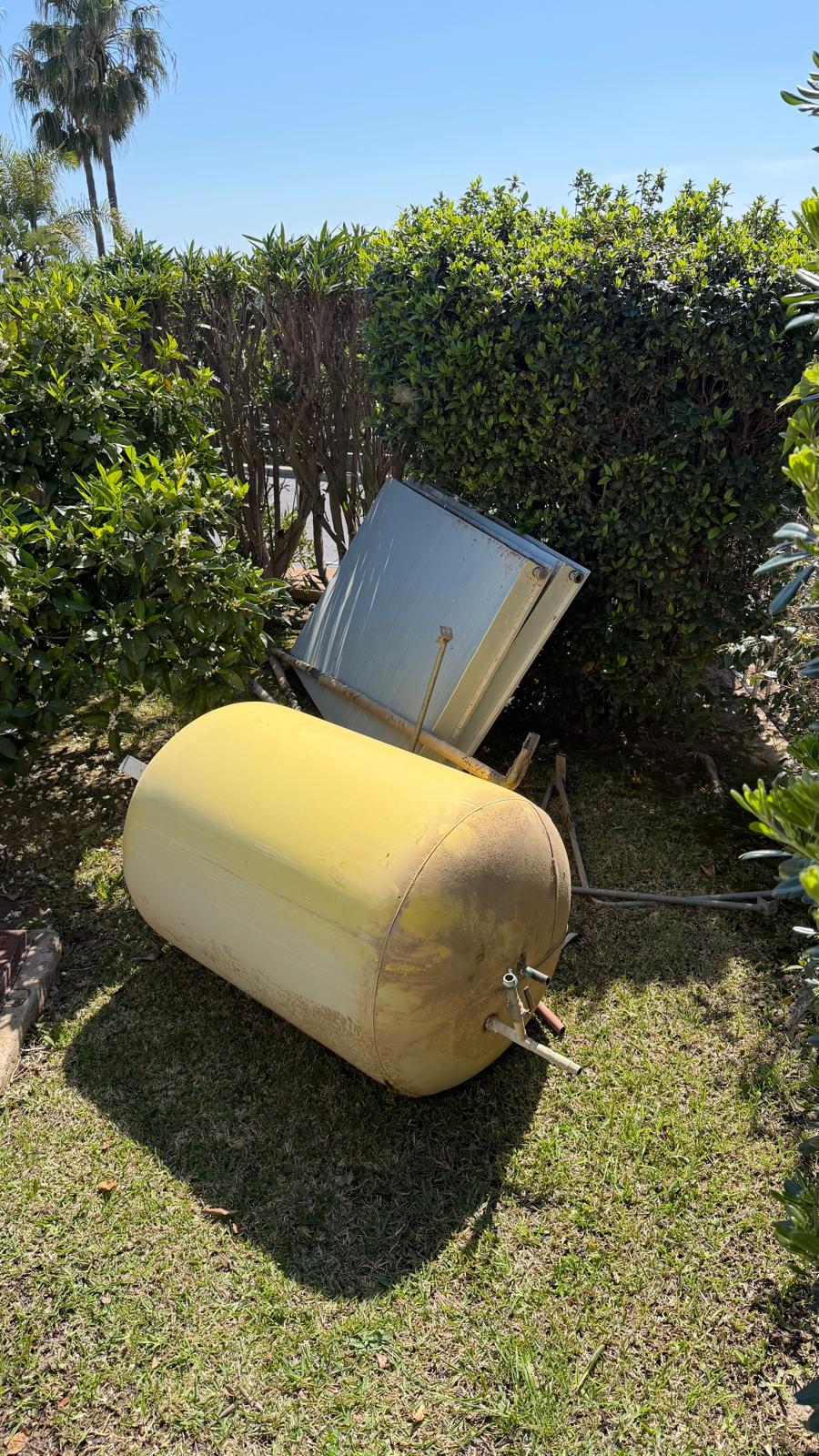
BEFORE: Corroded hot water cylinder and old solar panel — no anti-legionella protection
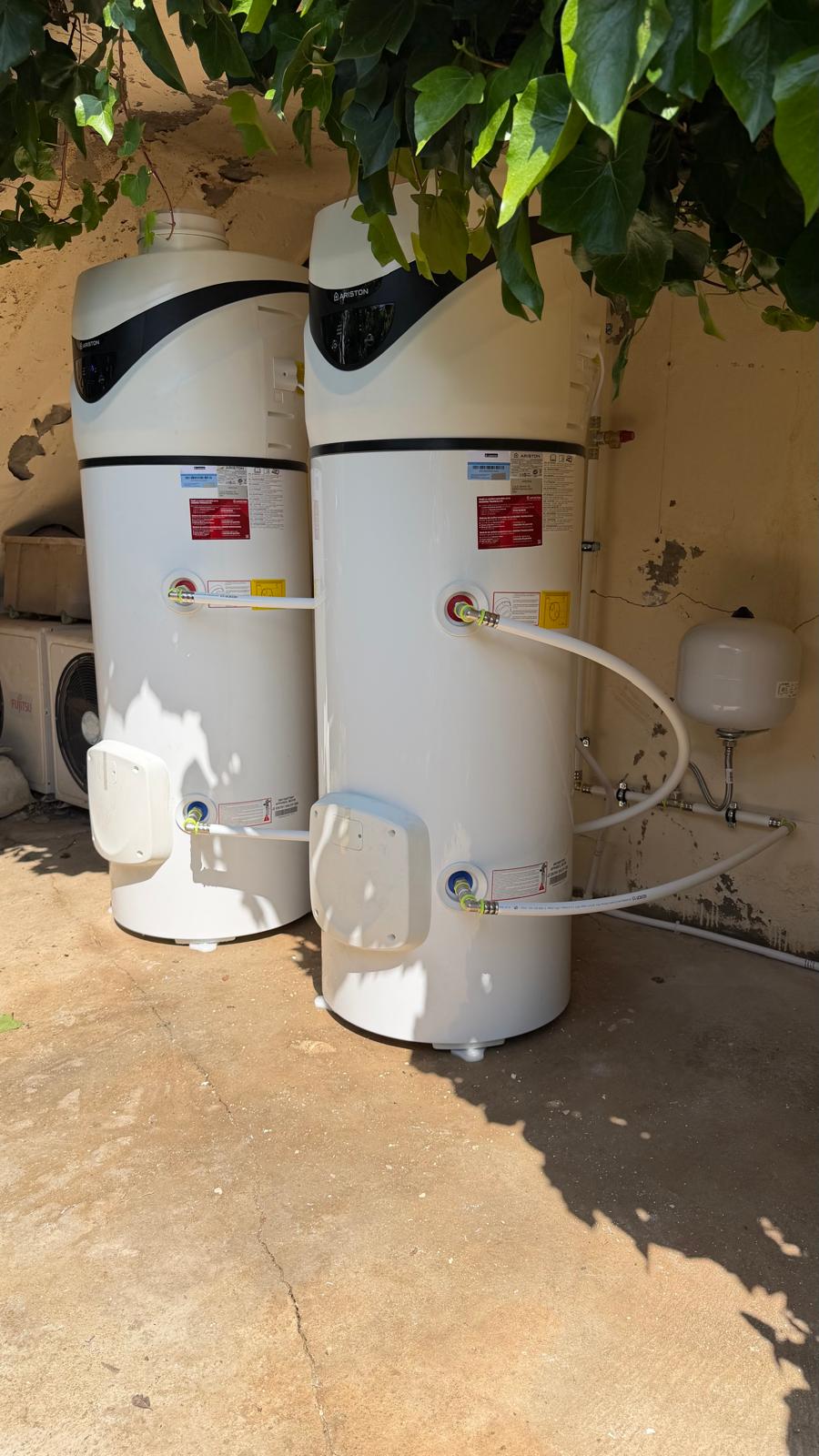
AFTER: Rear view showing plumbing connections, expansion vessel, and condensate drainage
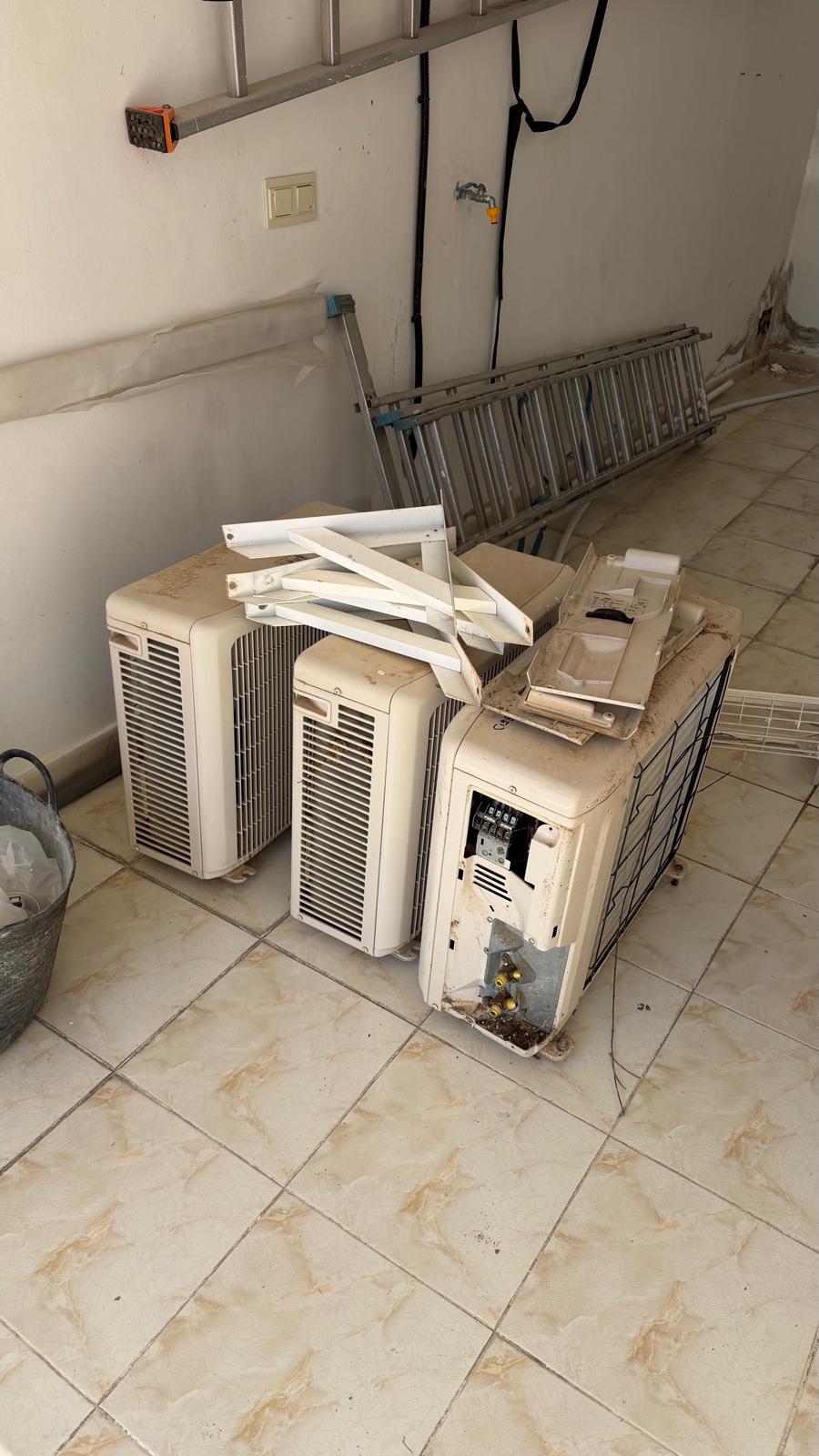
BEFORE: 3 Fujitsu condensing units — banned R-22 refrigerant, low efficiency
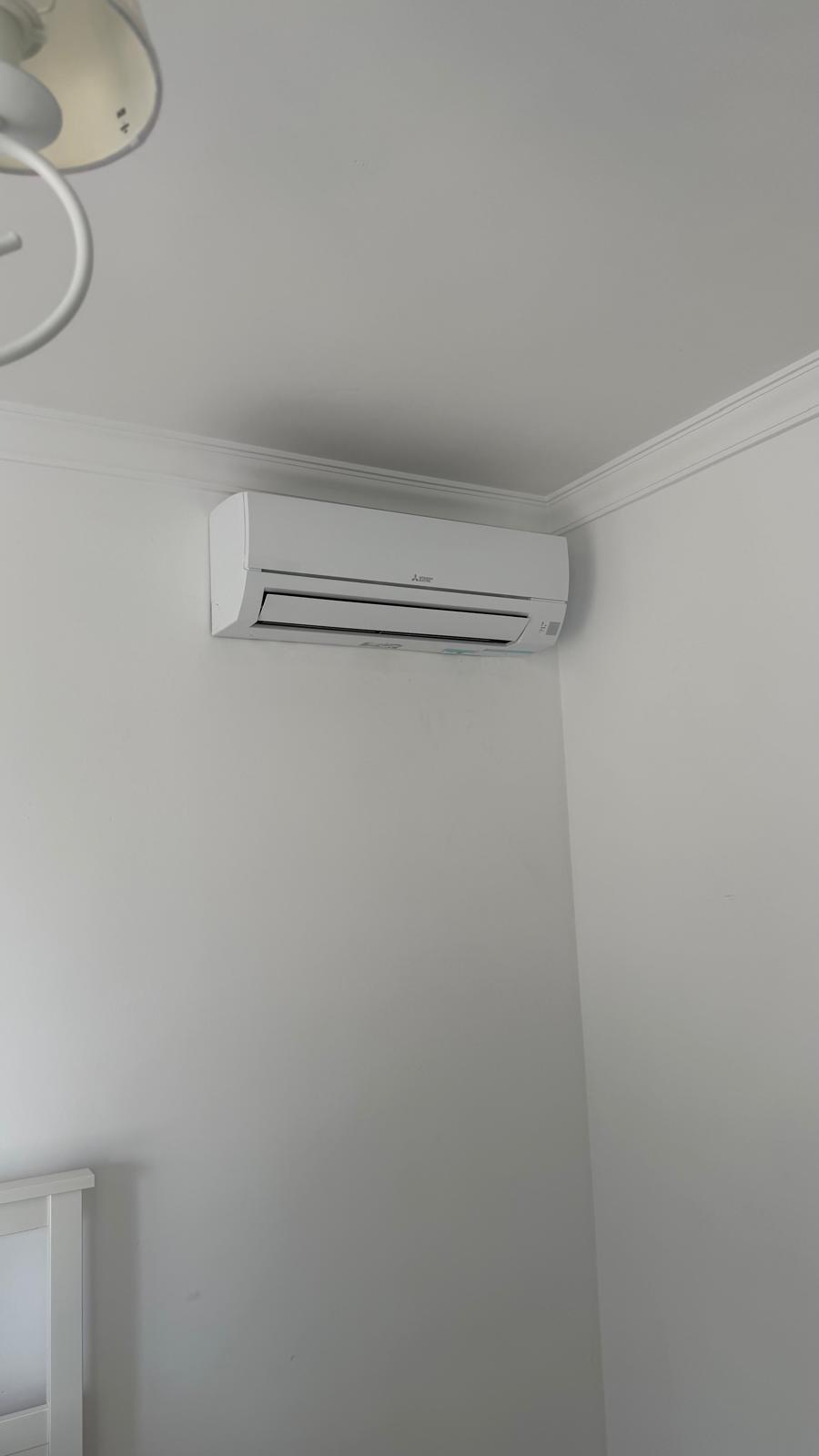
AFTER: Mitsubishi Electric MSZ-AP — A++, R-32, 19 dB(A), Wi-Fi control
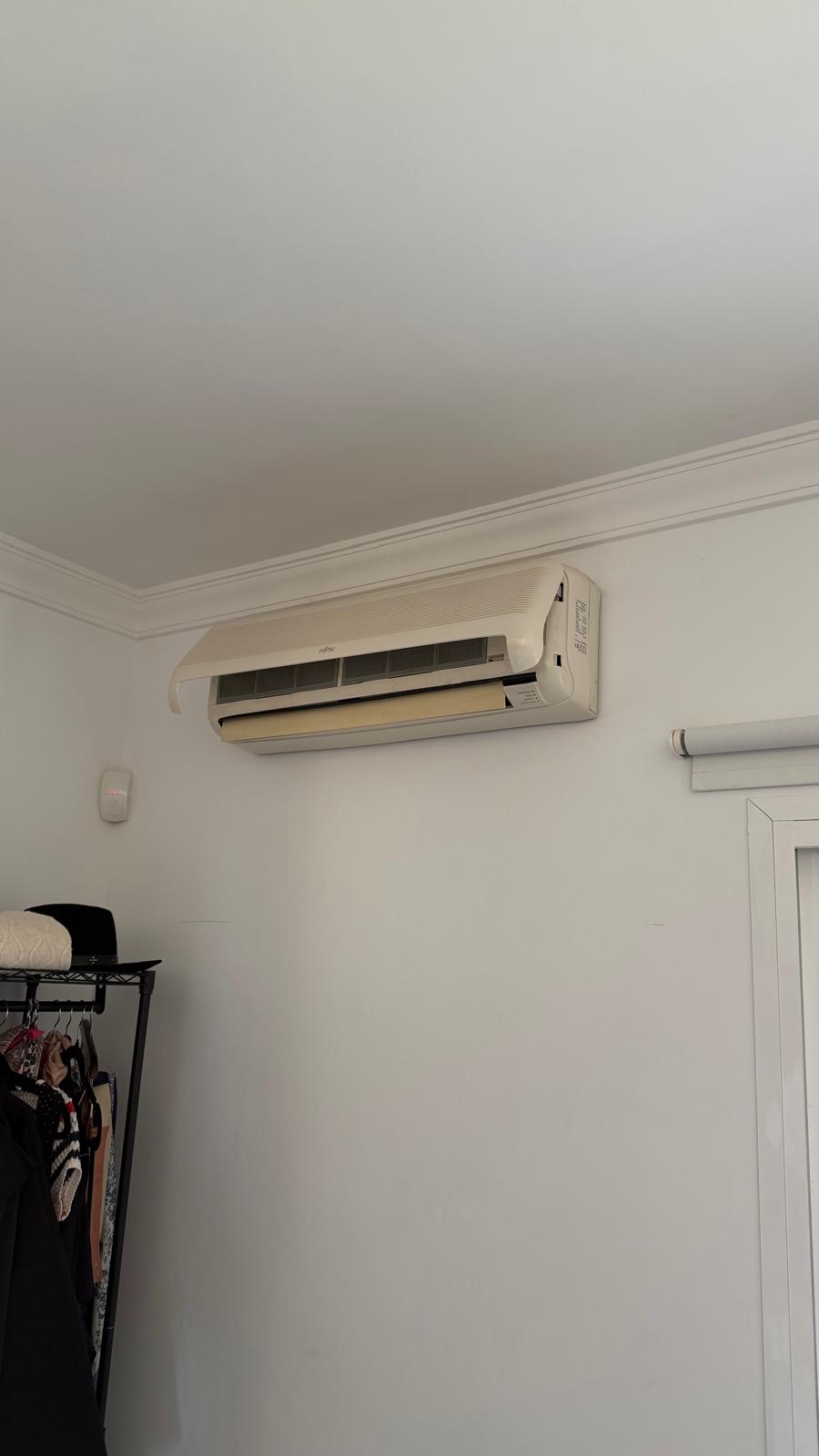
BEFORE: Old Fujitsu indoor unit — yellowed, degraded filters, R-22 refrigerant
Location
Marbella, Costa del Sol
Property Type
Detached Villa
Scope
Complete Energy System Overhaul
Systems
Aerothermal + AC + Water
Duration
5 Working Days
Before & After: Complete System Transformation
Every major energy and water system in this Marbella villa was stripped out and replaced with modern, efficient technology
BEFORE
Corroded solar thermal flat-plate collectors — 15+ years old, glycol leaked, panels producing minimal hot water
AFTER
2x Ariston Nuos Plus aerothermal heat pump water heaters — COP 3.5, A+ energy rating, 80% lower running costs than direct electric
BEFORE
Aged yellow hot water cylinder — corroded, poorly insulated, no temperature control, legionella risk
AFTER
Integrated Ariston cylinders with built-in anti-legionella cycles, digital temperature control, and expansion vessels
BEFORE
4x outdated Fujitsu split AC units — R-22 refrigerant (banned), low efficiency, poor cooling performance
AFTER
4x new Mitsubishi Electric MSZ-AP series split systems — R-32 refrigerant, A++ efficiency, Wi-Fi control, whisper-quiet operation
BEFORE
Hard water damaging appliances — limescale buildup on taps, showerheads, and inside the hot water system
AFTER
New water softener system protecting all appliances, extending aerothermal heat pump lifespan, and improving water quality
BEFORE
Low water pressure throughout the villa — inadequate flow for multiple bathrooms simultaneously
AFTER
New inverter-driven variable speed water pump with 1,500L storage tank — consistent pressure across all outlets, even during peak usage
The Challenge: A Villa Running on Failing 15-Year-Old Systems
The homeowner contacted Agua Therm after experiencing cascading failures across multiple systems in their Marbella villa. What started as a hot water complaint revealed a property running entirely on outdated, inefficient, and in some cases dangerous equipment:
- Solar thermal hot water panels had failed — glycol heat transfer fluid had leaked, flat-plate collectors were corroded, and the system was producing almost no hot water. The homeowner was relying on a backup electric immersion heater costing over €150/month
- The existing hot water cylinder was corroded, poorly insulated, and had no anti-legionella protection — a serious health risk in the Mediterranean climate where legionella bacteria thrive in warm, stagnant water between 25°C and 45°C
- Four Fujitsu split air conditioning units were over 12 years old, still running on R-22 refrigerant (banned under EU Regulation 517/2014 since January 2020). Recharging was illegal and replacement was the only legal option
- Hard water in the Marbella area (300+ mg/L calcium carbonate) was causing severe limescale buildup inside the old hot water system, reducing heat transfer efficiency by up to 25% and shortening equipment lifespan
- Water pressure throughout the villa was inadequate — when two showers ran simultaneously, pressure dropped to unusable levels. The existing pump was a fixed-speed unit drawing excessive power
Phase 1: Strip-Out — Removing All Obsolete Systems
Before installing any new equipment, our team systematically removed all failing systems. This is critical because old refrigerant lines, corroded pipework, and degraded electrical connections cannot be reused safely:
Solar Thermal Panel Removal
Removed 2 corroded flat-plate solar thermal collectors from the roof terrace. Drained remaining glycol heat transfer fluid (classified as hazardous waste under EU regulation). Removed all associated copper pipework, pump station, and controller. Sealed roof penetrations to prevent water ingress.
Old Hot Water Cylinder Removal
Disconnected and removed the corroded hot water storage cylinder. This unit had no sacrificial anode (meaning the tank itself was corroding from inside), poor insulation (estimated 30% standing heat loss), and no anti-legionella cycle capability.
Fujitsu AC Unit Decommissioning
Recovered all remaining R-22 refrigerant from the 4 Fujitsu split systems using certified recovery equipment (required under EU F-Gas Regulation 517/2014). Removed all 4 indoor wall units, 3 outdoor condensing units, and associated refrigerant pipework. Old brackets and cable runs were stripped to leave a clean installation for the new Mitsubishi Electric systems.
Old Pump & Pipework Removal
Removed the fixed-speed water pressure pump (high energy consumption, no variable speed control) and the associated pressure vessel. Inspected all domestic water pipework for limescale blockages.
Phase 2: Ariston Aerothermal Heat Pump Water Heaters
The centrepiece of this renovation: replacing the failed solar thermal system with 2 Ariston Nuos Plus aerothermal heat pump water heaters. Here's why this technology is superior to solar thermal for Marbella villas:
Technology
Extracts renewable energy from ambient air to heat water — works day and night, in all weather conditions, unlike solar thermal which only works when the sun is shining
COP (Coefficient of Performance)
For every 1 kWh of electricity consumed, the heat pump produces 3.5 kWh of heat energy. This means 71% of the energy is free renewable energy extracted from the air
Energy Rating
Verified A+ energy efficiency under European energy labelling regulations — the highest practical rating for domestic hot water production
Annual Running Cost (estimated)
Compared to €1,800+/year for direct electric immersion heating, or €900-€1,200/year for a gas boiler — aerothermal delivers the lowest running costs of any water heating technology
Anti-Legionella Protection
The Ariston Nuos Plus automatically raises water temperature to 60°C weekly to eliminate legionella bacteria — critical for Mediterranean climates. The old cylinder had no such protection.
Refrigerant
Ultra-low global warming potential natural refrigerant. Compared to R-410A (GWP 2,088) used in many competitors, R-290 has 696x lower climate impact
Why two units instead of one? This villa has 4 bathrooms plus a kitchen. A single aerothermal unit would struggle to maintain hot water delivery during peak demand (morning showers, dishwasher, washing machine). Two units provide redundancy — if one requires servicing, the other maintains hot water supply — and ensure instant recovery time between uses.
- Works 24/7 in all weather — solar thermal only produces hot water when the sun shines (zero output at night, on cloudy days, and during winter evenings when demand is highest)
- No glycol fluid to leak or replace — solar thermal systems require glycol heat transfer fluid that degrades over 5-7 years and eventually leaks, exactly as happened in this villa
- No roof-mounted collectors to corrode — aerothermal units are ground-level, easily accessible for maintenance, and not exposed to UV degradation or coastal salt air damage to collectors
- Lower maintenance costs — no annual glycol checks, no pump station servicing, no collector cleaning. Just an annual filter clean and refrigerant circuit check
- Higher efficiency in Mediterranean climate — Marbella's average ambient air temperature of 18.5°C provides ideal conditions for aerothermal heat pumps (COP increases with warmer air)
- No risk of overheating — solar thermal systems can overheat in summer when hot water demand is low but solar radiation is intense, causing glycol to boil and degrade (known as 'stagnation'). Aerothermal units simply stop when the tank reaches target temperature
Phase 3: Mitsubishi Electric Air Conditioning — 4-Zone Climate Control
All four Fujitsu split AC units were replaced with new Mitsubishi Electric MSZ-AP series inverter-driven systems. The upgrade addresses multiple critical issues:
R-32 Refrigerant Compliance
The old Fujitsu units used R-22 refrigerant, banned under EU F-Gas Regulation 517/2014. R-22 has an ozone depletion potential (ODP) of 0.055 and a global warming potential (GWP) of 1,810. The new Mitsubishi Electric units use R-32 with zero ODP and GWP of 675 — a 63% reduction in climate impact.
A++ Inverter Efficiency
Mitsubishi Electric's DC inverter compressor technology modulates power output continuously to match actual demand. Unlike the old fixed-speed Fujitsu compressors that cycled on/off at full power, inverter technology reduces electricity consumption by 30-50% while maintaining more precise temperature control (±0.5°C).
Wi-Fi Control via MELCloud
All 4 new units are connected to Mitsubishi Electric's MELCloud platform, allowing the homeowner to control each room's temperature remotely via smartphone. This is particularly valuable for Marbella villa owners who travel — you can pre-cool the house before arriving and switch off when leaving.
Whisper-Quiet Operation
The Mitsubishi Electric MSZ-AP indoor unit operates at just 19 dB(A) on the lowest fan speed — quieter than a whisper (20 dB). The old Fujitsu units were measured at 38-42 dB, more than double the perceived noise level.
Each of the 4 split systems was installed with new refrigerant pipework (the old R-22 lines cannot be reused with R-32), new electrical supplies from the consumer unit, new condensate drainage, and new outdoor brackets with anti-vibration rubber mounts. All outdoor units were positioned to minimise visual impact and noise exposure to neighbouring properties — a planning consideration that many installers overlook in Marbella.
Phase 4: Water Infrastructure — Softener, Storage & Pressure
The final phase addressed the villa's chronic water quality and pressure issues — often overlooked in HVAC projects but critical for system longevity:
Water Softener
Marbella's mains water supply has high calcium carbonate content (typically 280-350 mg/L — classified as 'very hard'). Without treatment, limescale accumulates inside heat exchangers, pipework, and appliances at a rate of approximately 1.5mm per year. This reduces heat transfer efficiency in the aerothermal units by up to 25% and can halve equipment lifespan. The new water softener uses ion-exchange resin to remove calcium and magnesium ions, protecting all downstream systems and improving water quality for bathing.
1,500-Litre Water Storage Tank
A 1,500L water storage tank was installed to provide domestic water reserves. In Marbella, mains water supply interruptions occur periodically during peak summer demand. The storage tank ensures the villa maintains water supply even during mains outages, and provides a buffer for the pressure system to draw from — eliminating pressure drops when multiple outlets are used simultaneously.
Inverter-Driven Variable Speed Water Pump
The old fixed-speed pump was replaced with a modern inverter-driven variable speed pump. Unlike fixed-speed pumps that run at full power regardless of demand (wasting energy and causing pressure surges), the inverter pump adjusts its speed to match actual water flow requirements. This delivers consistent pressure at every tap and shower while using up to 50% less electricity than the old pump. The variable speed operation also eliminates water hammer — the banging noise in pipes caused by sudden pressure changes from fixed-speed pump cycling.
Expert Insight: Why Complete System Replacement Outperforms Patchwork Repairs
This Marbella villa is a textbook example of why we recommend full system replacement over patchwork repairs. The homeowner had been spending hundreds of euros per year on emergency fixes — topping up glycol in the solar thermal, recharging the illegal R-22 refrigerant, replacing corroded pump components. Each repair was just keeping a dying system alive for another few months. When we calculated the total cost of ongoing repairs versus a complete system replacement with modern aerothermal and inverter AC technology, the payback period was under 4 years. After that, the owner saves €3,000-€4,000 per year in reduced energy bills and zero repair costs. The Ariston aerothermal units alone will save around €1,500 per year compared to the electric immersion heater they were relying on. Add the Mitsubishi Electric inverter AC savings, and this villa's total energy costs drop dramatically. That's a transformation, not just a repair.

Rob Greeves
HVAC Director, Agua Therm
Electrical Infrastructure & System Integration
A project like this isn't just about swapping old boxes for new ones — the electrical infrastructure has to support it all. We upgraded the consumer unit to handle the new loads: 2 aerothermal heat pumps, 4 Mitsubishi Electric AC circuits, and the inverter water pump. Each circuit has individual MCB protection and RCD coverage as required by Spanish electrical regulations (REBT/ITC-BT). The aerothermal units are programmed to heat water during off-peak hours to take advantage of lower electricity tariffs — so the hot water production is as cost-effective as possible. We also installed surge protection on all circuits — Marbella gets intense coastal thunderstorms that can destroy heat pump controllers in a single strike. Every component in this system is protected.

Craig Whitham
Electrical Director, Agua Therm
Premium alternative · What we could also have installed
How Airzone could unify the 4 Mitsubishi Electric splits into a single app
This Marbella villa is now cooled by 4 independent Mitsubishi Electric MSZ-AP splits — each with its own IR remote and, via MELCloud, its own app. It works, but it means four interfaces, four separate schedules and no overall picture. Airzone — a manufacturer headquartered in Málaga, under 60 km from Marbella — builds dedicated Aidoo Pro adapters for each Mitsubishi Electric range (MSZ, PUHZ, PEAD…) that bring all 4 splits into a single villa-wide app, with HomeKit, Alexa, Google Assistant and the home-automation buses used by the Loxone, Crestron and Control4 systems that are common in the area.
As accredited Airzone installers on the Costa del Sol — the system is deployed and documented in our Mijas Airzone Flexa 4.0 UFH case study · more on our Airzone work — we know the three product paths that apply to a multi-split deployment like this one.
Mitsubishi Electric–specific adapter that plugs into the CN105 port on each MSZ-AP indoor unit. Exposes mode, setpoint, fan speed and louvre control to the Airzone Cloud app, Alexa, Google Assistant and Apple HomeKit — without replacing the original IR remote or MAC controller.
Four adapters, one per room: master bedroom, living room and two guest rooms.
A single app shows the state of all 4 splits at once — setpoint, mode, estimated consumption and schedules. Supports scenes ('all OFF when leaving'), geofencing (auto-off when you move more than 1 km from the villa) and per-room schedules with different setpoints for weekdays and weekends.
Especially useful for non-resident owners who arrive at the villa for weekends.
For owners who already have — or are planning — Loxone, Crestron, Control4 or Vimar, Aidoo Pro exposes the 4 splits over KNX, Modbus RTU/TCP and BACnet IP. The home-automation integrator sees them as native devices and can tie them to presence sensors, blinds and lighting scenes.
Local REST API + Home Assistant integration for technical users.
Important: the 2 Ariston Nuos units do not integrate with Airzone
Worth being clear: the 2 Ariston Nuos Plus heat pump water heaters installed in this villa are standalone compact HPWHs, with their own thermostat, their own anti-legionella cycle and their own Ariston Net connectivity. They do not expose an Airzone-compatible bus, so neither Aidoo Pro nor the Airzone Cloud app controls them. The Airzone control layer described above applies only to the 4 Mitsubishi Electric splits — DHW remains managed from Ariston Net (which also offers an app, voice control and consumption history).
Quantifiable benefits of adding Airzone to the 4 splits
Why Airzone is a technical fit for this project
Every MSZ-AP indoor unit we installed in this villa ships from the factory with the CN105 connector — exactly the port the Aidoo Pro Mitsubishi Electric plugs into. The consumer-unit upgrade Craig delivered leaves ample capacity for the four Aidoo Pro 5 V / 1 A DC supplies (combined nominal max of 20 W, negligible next to the 4 splits). And the Wi-Fi mesh that already covers the villa for MELCloud provides, with no further work, the cloud connectivity that Airzone Cloud needs.
Want all your Mitsubishi splits in a single app?
We provide no-obligation technical surveys for Aidoo Pro Mitsubishi Electric, Airzone Cloud and KNX/Modbus integration on villas in Marbella, Estepona, Mijas and across the Costa del Sol.
Request an Airzone quoteSources: Airzone (airzonecontrol.com) · European Building Automation and Control Association — eu.bac · Universidad de Córdoba · KNX Association. Savings figures published by the manufacturer; actual performance depends on the home, occupancy patterns and setpoints.
Project Results
50-60%
Energy Cost Reduction
COP 3.5
Hot Water Efficiency
19 dB(A)
AC Noise Level
4.2 tonnes/yr
CO2 Reduction
5
Systems Replaced
5 Days
Project Duration
Complete Scope of Works
- Strip-out and disposal of 2 corroded solar thermal flat-plate collectors and pump station
- Removal and safe disposal of old hot water cylinder (corroded, no anti-legionella protection)
- R-22 refrigerant recovery and certified disposal from 4 Fujitsu AC units (EU F-Gas compliant)
- Supply and installation of 2x Ariston Nuos Plus aerothermal heat pump water heaters with expansion vessels
- Supply and installation of 4x Mitsubishi Electric MSZ-AP split AC systems with new refrigerant pipework
- Supply and installation of water softener system with bypass valve
- Supply and installation of 1,500L domestic water storage tank
- Supply and installation of inverter-driven variable speed water pressure pump
- Consumer unit upgrade with individual MCB/RCD protection for all new circuits
- Surge protection on all electrical circuits (heat pumps, AC, water pump)
- Full system commissioning, performance testing, and homeowner training
- All installation documentation, warranty registration, and maintenance schedule provided
Why Choose Agua Therm for Complete Villa Energy Upgrades in Marbella?
- HVAC installation by Agua Therm, with other specialist trades coordinated within an agreed project scope
- Installation of Ariston and Mitsubishi Electric equipment selected for this project's requirements
- Refrigerant recovery and disposal responsibilities must be agreed with appropriately qualified personnel
- Electrical work, including consumer unit upgrades and surge protection, is handled by LIT Electricians under a separate electrical scope
- Deep Costa del Sol experience: we understand Marbella's specific challenges — hard water, coastal corrosion, summer peak demand, and planning requirements
- Transparent pricing: full written quote before work begins, no hidden extras. This project was delivered on-budget and on-schedule in 5 working days
Agua Therm provides complete villa energy renovations in Marbella and across the Costa del Sol, including Benalmádena, Fuengirola, Mijas, Estepona, Benahavís, and Ojén.
Frequently Asked Questions — Villa Energy Upgrades Marbella
Manufacturers, Standards & Official Sources
On this installation we work exclusively with internationally recognised manufacturers and in full compliance with current European and Spanish regulation. For full transparency and verification, we link below to the official sources for each manufacturer of equipment or instrumentation used on this project, as well as the applicable legal texts:
Ariston Spain — manufacturer of the two Nuos Plus aerothermal heat pump water heaters that replaced the failed solar thermal system.
Spanish subsidiary of Mitsubishi Electric — manufacturer of the four MSZ-AP R32 split units installed across the villa.
Fujitsu General — manufacturer of the legacy Fujitsu R-22 air conditioning equipment that reached end-of-life and was replaced.
Consolidated F-Gas Regulation — basis for the recovery and disposal of the legacy R-22 refrigerant from the old Fujitsu equipment.
Spanish Royal Decree on handling of fluorinated gases — required for any intervention on the new R32 split circuits and old R-22 recovery.
Official EU page on air conditioner energy labelling — defines the A+++ to G scale and SEER/SCOP methodology referenced for the new equipment.
Explore the technical documentation for the equipment used in this project. External links open in a new tab.
Also see
About the Author
Ben Hayden
English-Speaking Electrician & Independent Energy Advisor
Ben Hayden is an English speaking electrician and independent energy advisor based in Marbella, Spain, with over 15 years of electrical experience across Europe. He provides independent energy and electrical checks for overseas property owners and managers across the Costa del Sol — helping clients cut electricity bills, navigate Spanish regulations, and make confident decisions on solar PV, heat pump, EV charger and battery storage projects.
Ben advises in plain English on projects where the paperwork is in Spanish and the stakes are high. His writing has appeared in ExpatArrivals, The Olive Press, Euro Weekly News, BuildingTalk and pv magazine.