

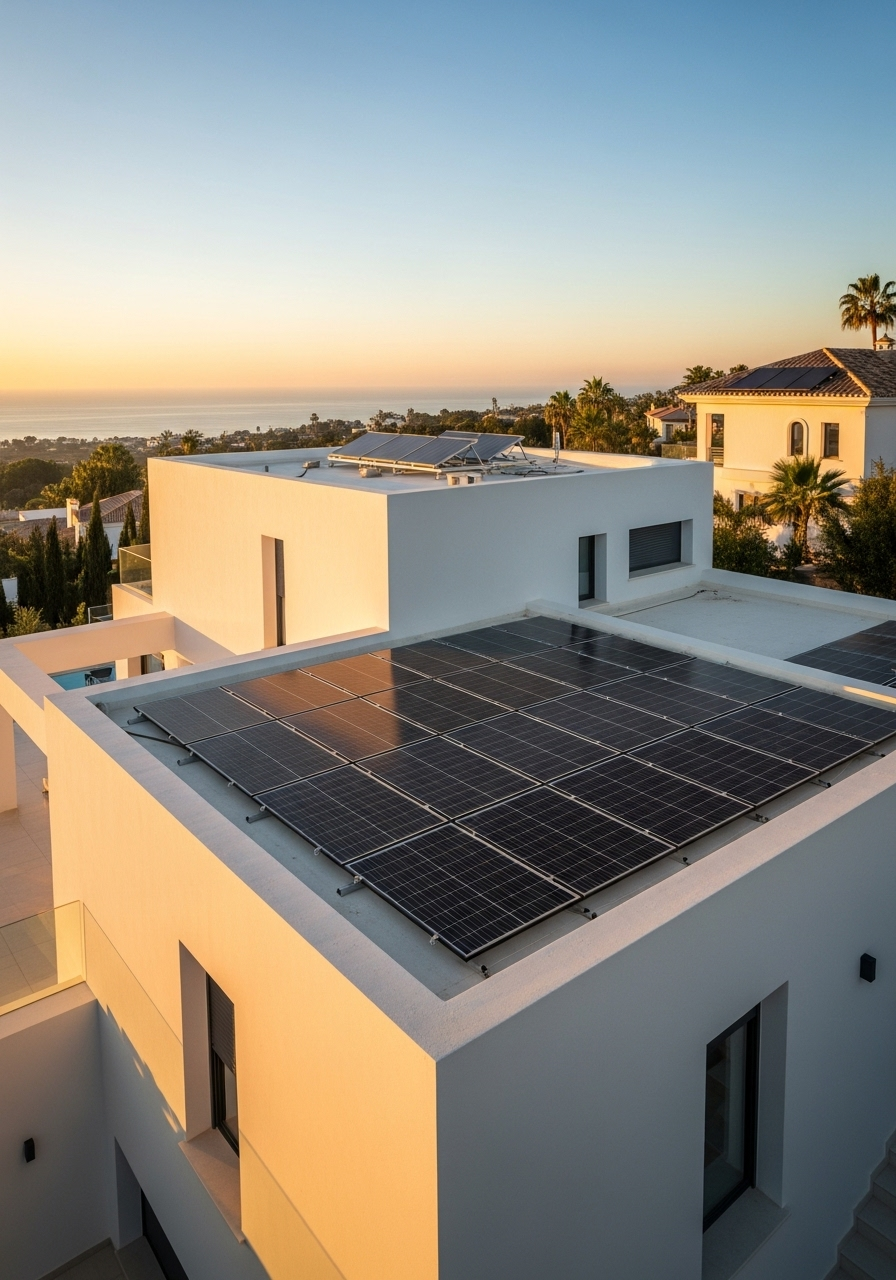
How Costa del Sol Homeowners Can Beat Rising Electricity Bills and Summer Blackouts
Every summer the same story plays out: the heat climbs, every AC unit switches on at once, and two things follow — bills jump and the local grid strains. It doesn't have to be that way.
Every summer, the same story plays out across the Costa del Sol. The temperature climbs past 35°C, every air-conditioning unit in the urbanisation switches on at once, and two things follow almost immediately: electricity bills jump, and the local grid begins to strain. For expats and second-home owners in Marbella, Mijas and Estepona, it becomes an uncomfortable trade-off — pay a small fortune to stay cool, or sweat through the afternoon to keep costs under control.
It doesn't have to be that way. Over the past few years, homeowners along the coast have quietly been rethinking how their properties make, store and use energy — and the results are striking. Bills come down, comfort goes up, and the home keeps running even when the street outside loses power. Here's how that works, and what to look for if you're tired of being at the mercy of your next bill.
Why Your Summer Electricity Bill Keeps Climbing
Spanish electricity prices have been volatile for several years, and the way most homes are set up makes the problem worse rather than better. Older split air-conditioning units and electric heaters are simple, but they're inefficient and completely dependent on the grid. They draw their power at the worst possible moment — peak afternoon hours, when tariffs are typically highest and demand across the coast is at its greatest.
There's no buffer and no backup. When a localised power cut hits during a heatwave — an increasingly common event as ageing infrastructure meets record summer demand — your home heats up within minutes, your fridge and freezer are at risk, and sensitive electronics can be exposed to surges when the supply suddenly returns. A grid-only home, in other words, has no defence against the two trends that now define summer on the Costa del Sol: unpredictable energy prices and an unreliable supply.
Many expat-owned villas also sit empty for part of the year, which makes inefficiency even more costly — you can end up paying premium rates to cool or heat a property you're barely using, simply because the system has no intelligence built into it.
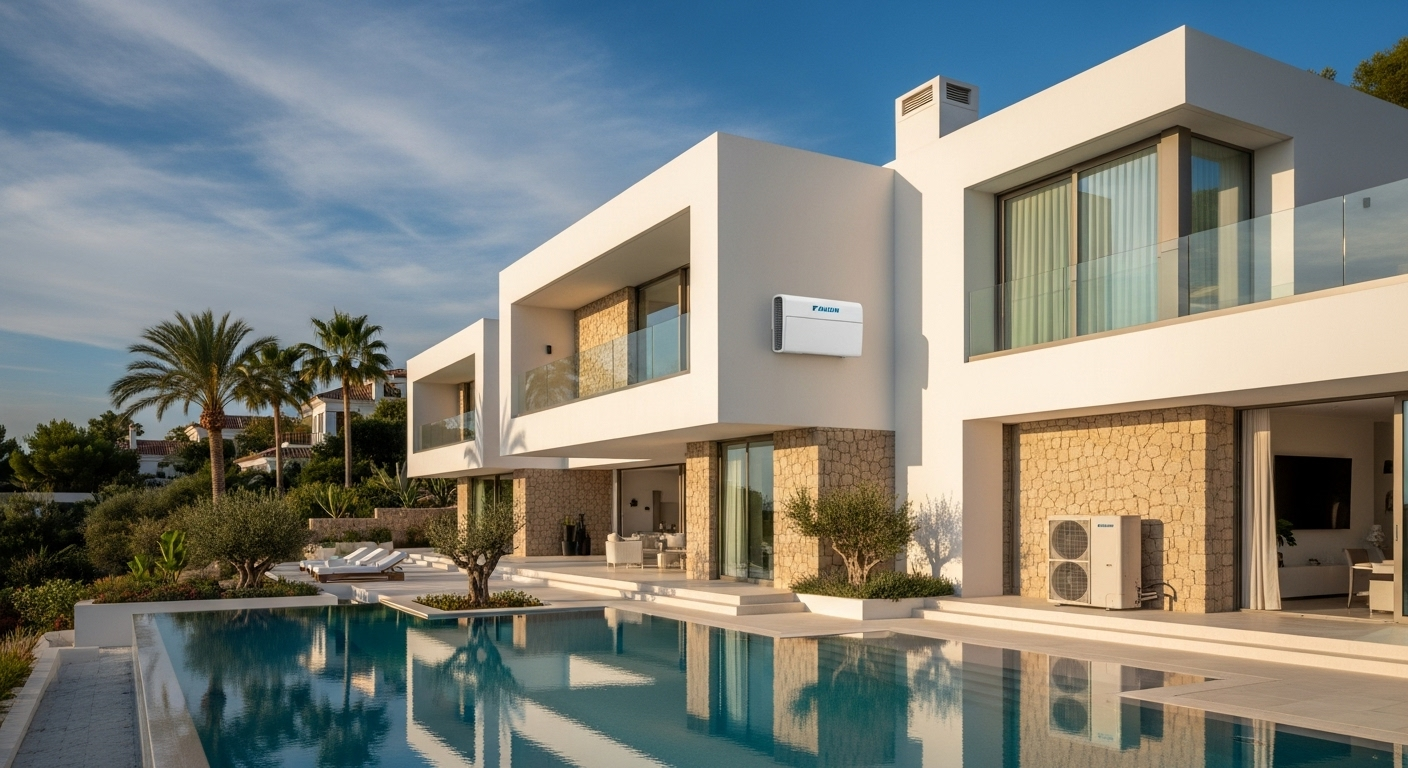
"Your roof is a power station you haven't switched on yet."
The Smarter Setup: Solar, Heat Pumps and Smart Zoning Working Together
The homes that manage to stay cool and keep their bills low almost always combine three technologies into a single, self-supporting system. Individually each one helps; together they transform a property's energy profile.
Air-Source Heat Pump (Aerotermia)
Modern heat pumps from brands such as Daikin and Mitsubishi Electric are remarkably efficient. Rather than generating heat or cold directly, they move it — and for every kilowatt of electricity they consume, they can deliver roughly three to four kilowatts of heating or cooling. A single, properly sized unit can handle climate control, hot water and, in many villas, pool heating, allowing you to retire an old gas or oil boiler completely.
Solar Panels with Battery Storage
Pairing the heat pump with rooftop solar and modern lithium battery storage (such as Deye) is what changes the economics completely. During the day, your panels generate far more electricity than the house needs, so your cooling runs on free sunshine. The surplus charges the battery, which you then draw on in the evening — or during a blackout.
Smart Zoning
Even the most efficient heat pump wastes energy if it's cooling rooms nobody is in. A system like Airzone lets you control the temperature room by room, so you cool the bedrooms at night and the living areas by day — never the whole house at once. It's one of the simplest and most cost-effective upgrades available.
Put together, the benefits are hard to ignore:
Lower bills
Run your HVAC on solar power during peak daylight hours instead of expensive grid electricity, and use stored battery power once the sun goes down.
Blackout resilience
Battery storage keeps essential appliances, cooling, refrigeration and security systems running when the grid fails — no more scrambling for candles during a heatwave.
Year-round value
The same equipment that cools you in August heats your home, water and pool through the cooler months, extending the season you can actually enjoy the property.
A more valuable home
A modern, efficient system and a strong energy-performance certificate are increasingly what buyers and renters look for in a Spanish property.
What About Government Grants?
Spain does offer renewable-energy incentives, and they can be genuinely worthwhile. But it's important to understand how they work: the application paperwork — eligibility checks, regional grant submissions, tax deductions and the related bureaucracy — is handled by independent grant specialists, not by your installer. A reputable installation company's job is to design and fit the system correctly and register your manufacturer warranty on your behalf. Treat the grant process as a separate, parallel step, and speak to a dedicated subsidy specialist about what you may be entitled to before you start.
Agua Therm does not process subsidies — we are installers
IDAE grant applications, IRPF tax deductions, and IBI/ICIO rebates must be processed by you or an independent specialist subsidy company. Agua Therm will provide all the installation documentation you need (invoices, installation certificate, technical specs) for your application.
See our list of verified specialist companies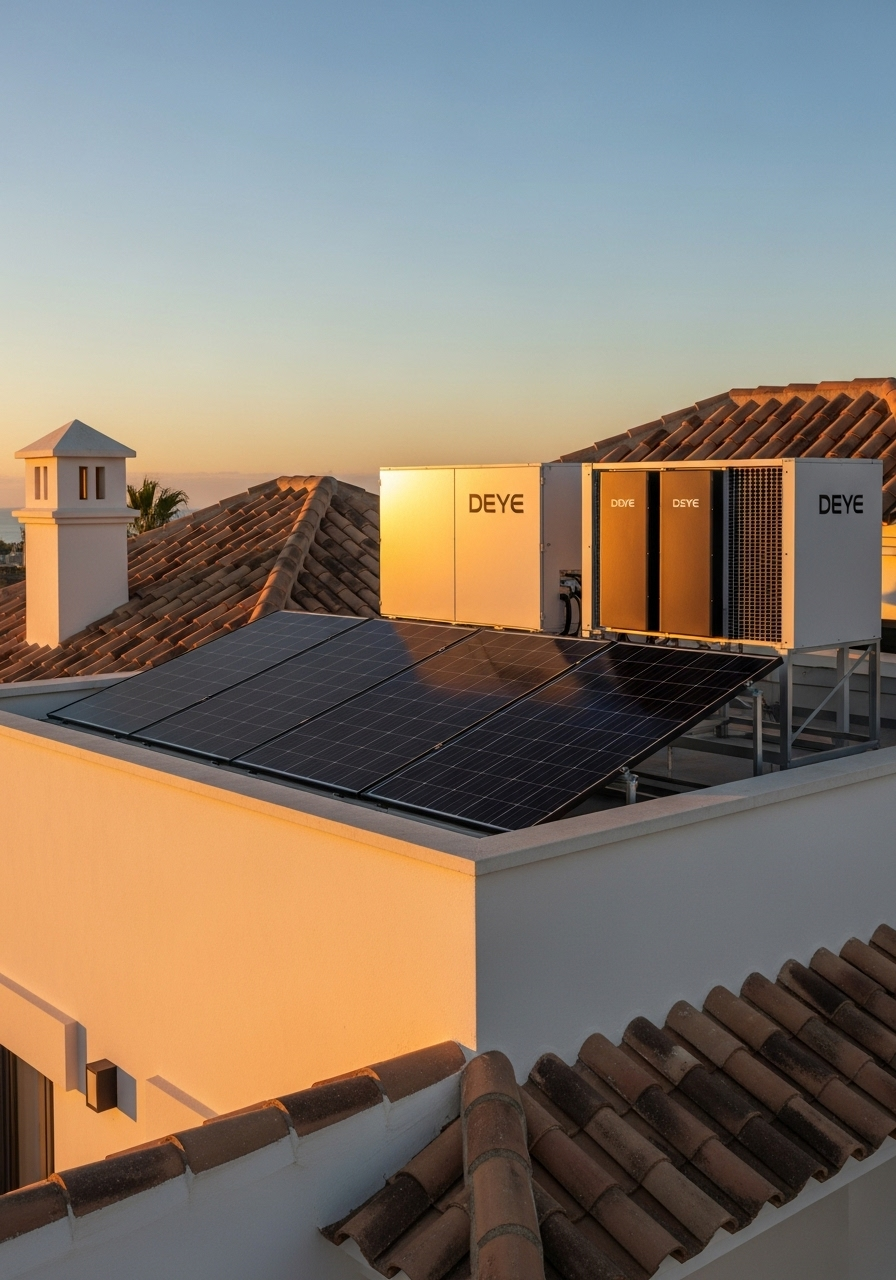
Why Installation Quality Matters More Than the Cheapest Quote
Here's the part many homeowners learn the hard way: the same equipment can perform brilliantly or badly depending entirely on who installs it. Coastal properties bring their own challenges — salt-laden air that corrodes poorly chosen fittings, flat villa roofs that need proper mounting and drainage, and older electrical supplies that may need upgrading before solar or a heat pump can be added safely.
Getting the details right — unit sizing, panel orientation, battery capacity, zoning layout and compliance with current Spanish and EU standards — is what separates a system that quietly saves you money for fifteen years from one that disappoints from the first summer. That's why working with experienced, certified local installers who know the coast pays off long after the cheapest quote has been forgotten.
Take Control of Your Energy Future
The cost of doing nothing rises every summer. Don't wait for the next heatwave or the next power cut. A well-designed combination of solar, heat-pump and battery storage can transform your comfort, slash your bills and add real value to your property — all at the same time.
The certified local team at Agua-Therm Marbella offers a completely free home energy survey across Marbella, Mijas, Estepona and the wider Costa del Sol.
Frequently Asked Questions
About the Author
Ben Hayden
English-Speaking Electrician & Independent Energy Advisor
Ben Hayden is an English speaking electrician and independent energy advisor based in Marbella, Spain, with over 15 years of electrical experience across Europe. He provides independent energy and electrical checks for overseas property owners and managers across the Costa del Sol — helping clients cut electricity bills, navigate Spanish regulations, and make confident decisions on solar PV, heat pump, EV charger and battery storage projects.
Ben advises in plain English on projects where the paperwork is in Spanish and the stakes are high. His writing has appeared in ExpatArrivals, The Olive Press, Euro Weekly News, BuildingTalk and pv magazine.